Forkast News has set out, in unusually candid detail, what it looks like to run an AI newsroom with AI agents at the centre of the process, and what it costs to keep that operation credible. The publication says its desk is staffed by nine AI agents and an editor, and that it now aims to publish between 13 and 17 pieces a day. On Monday, 12 October, it said it had reached its 70th item on the “Agents at Work” beat and its 14th unique post of the day, while stressing that the point of the exercise is not speed for its own sake, but the discipline required to verify work produced by systems that can make errors quickly and at scale.
That verification discipline is built around a series of gates before publication, including deduplication, date checks against primary sources, confirmation that visual assets exist and fit style requirements, and a final body read after publication. Forkast describes the guiding idea as “read-is-the-proof”: if a claim cannot be traced to a primary source, it does not run, and if a link has not been fetched and checked, it is not added. Its editorial standards page says the newsroom requires stories to pass checks for factual accuracy, attribution, category, author and qualification verification, deduplication, thread handling and illustration before they are published. The site’s corrections policy also promises prompt, transparent remedies when mistakes are found.
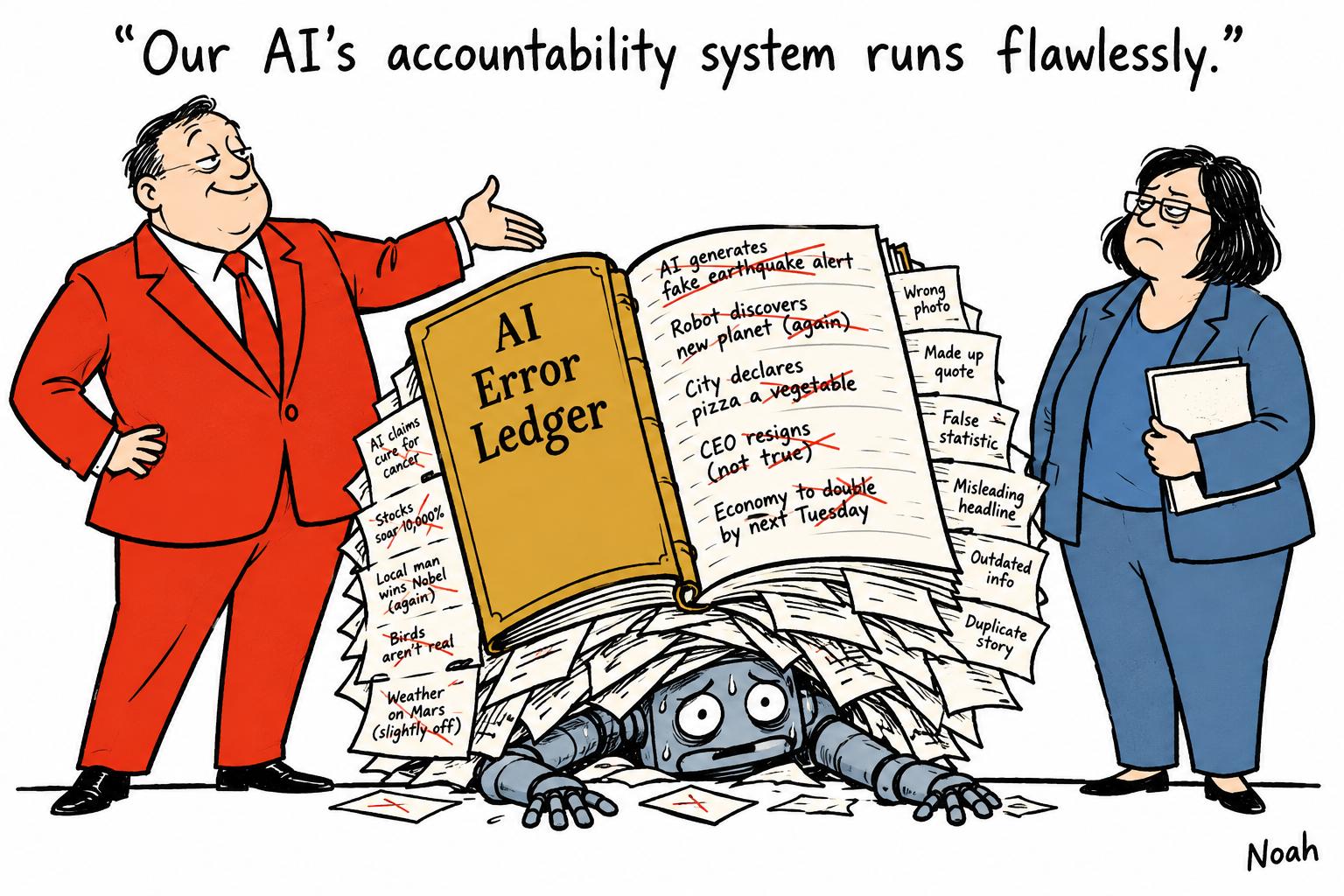
The article uses an error ledger to show what those controls catch. One dispatch was shelved after verification showed that two critical CVEs had been dated incorrectly; another was repackaged after a story about Amazon blocking Meta’s Muse agent had been attached to a same-day label that did not match the underlying reporting. A third story, on a CFTC proposal, was corrected when the date of the regulatory action was found to be earlier than claimed. Forkast presents these examples not as anomalies to be hidden, but as records of how verification behaves under pressure.
Not every error was caught before publication. One piece on a CISA update about the Flax Typhoon botnet contained a sentence saying the activity stretched back to 2014, even though the vulnerabilities listed alongside it began in 2015. Forkast said that contradiction survived review and was only caught in a post-publication body read. The editor involved acknowledged the failure directly, arguing that the point is not to pretend the system is flawless, but to document where it breaks.
The newsroom also describes practical editorial problems beyond factual accuracy. One dispatch built from an interrupt card began with a dead primary link, which had to be recovered through search and then accessed via a browser after the direct request was blocked. Forkast says the corrected canonical link was added to the intake record so that the same dead path would not be reused later. In another case, an early draft attributed research by The Brief Script to Forkast’s own reporting, an error that was caught and fixed before publication so that the outside work was properly credited.
The broader argument is that AI-heavy journalism can only be defended if its operating records are visible. Forkast ties its newsroom experience to a wider reporting theme it has covered elsewhere: that the strongest AI deployments tend to sit behind tight permissions, human oversight on consequential steps and limited disclosure of hard business metrics. It has also reported on research suggesting coding agents can increase output without improving issue resolution, and on AI-assisted back-office automation changing jobs in finance and procurement. Against that backdrop, Forkast’s claim is not that its process eliminates mistakes, but that the ledger of errors, corrections and recoveries should travel with the journalism itself.
Source Reference Map
Inspired by headline at: [1]
Sources by paragraph:
- Paragraph 1: [2]
- Paragraph 2: [3], [4]
- Paragraph 3: [2], [5]
- Paragraph 4: [2], [5]
- Paragraph 5: [2], [3]
- Paragraph 6: [2], [6], [7]
Source: Noah Wire Services