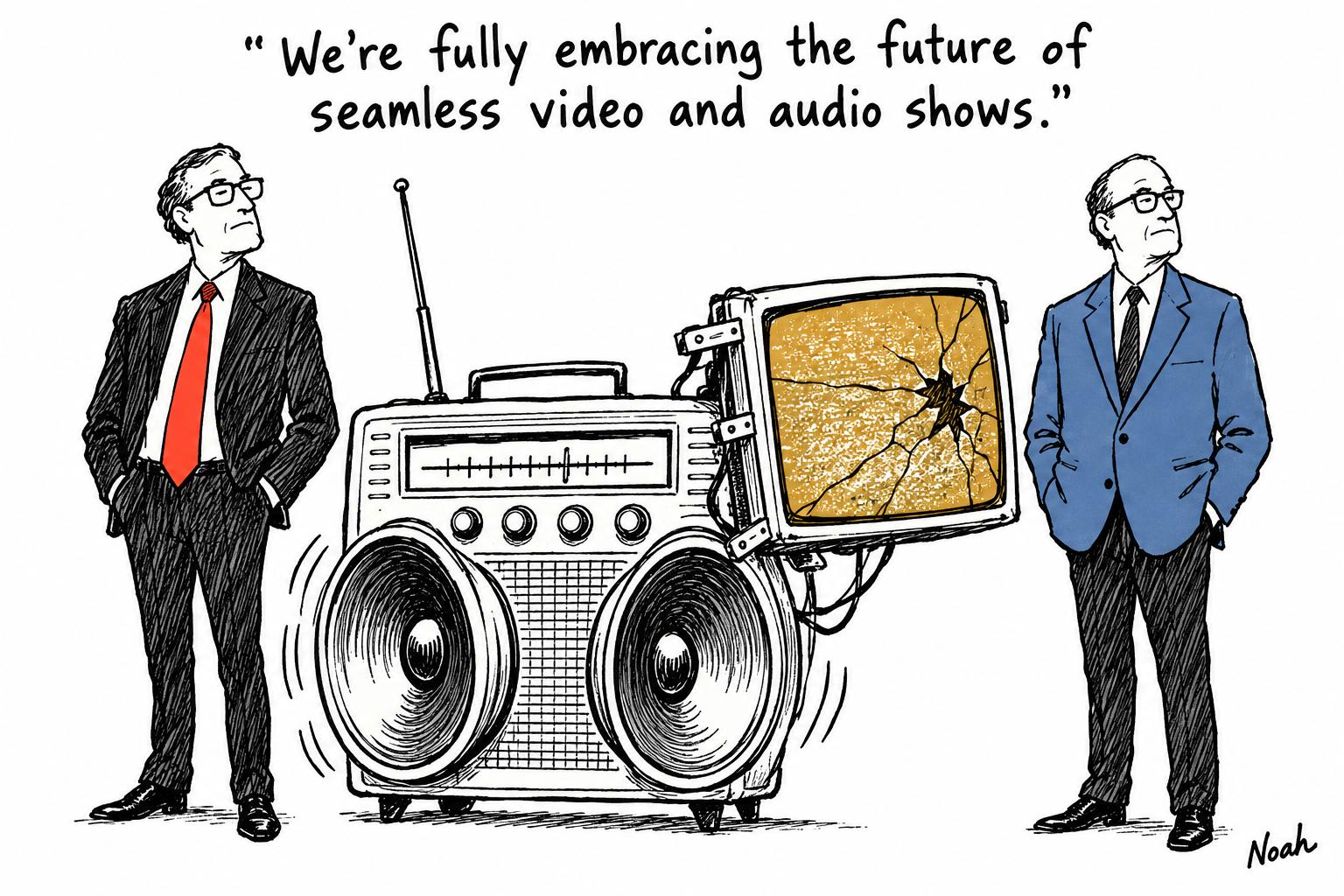
The publisher is merging its audio and video operations and giving programmes broader teams as it adapts to audiences consuming shows across platforms.
The Wall Street Journal is reshaping its podcast operation as the line between audio, video and social content continues to blur, with senior executives saying the publisher now needs a structure built around shows rather than a traditional audio department. Taneth Evans, the Journal’s head of digital, said at the Digiday Publishing Summit in Key Biscayne, Florida, that the company is preparing for a future in which its storytelling formats increasingly overlap, and that its teams must be organised accordingly.
At the centre of that shift is Samantha Henig, who has been hired into a newly created head of multimedia role overseeing both the Journal’s audio and video teams. The publication has also retitled its audio lead position, now held by Leital Molad, as senior director of shows, reflecting a broader remit that goes beyond podcast production alone. According to reporting from Citybiz, Henig is due to report into Deputy Editor in Chief Aja Whitaker-Moore, while Molad will report to Henig once she joins the newsroom.
Evans said the previous idea of maintaining a team focused solely on audio no longer made sense as video podcasts gain traction and audiences consume shows across multiple platforms. Instead, the Journal is moving towards a model in which each programme sits at the centre of a small, specialist group that can draw on audio producers, video staff, social editors, newsletter writers and, where relevant, live-events teams. In effect, the publisher wants every show to function as a brand hub rather than as a single-format product.
The Journal’s approach also fits with a wider editorial strategy that places a premium on embedding specialists within coverage areas. Evans has described those strategists as advocates for readers, working alongside newsroom teams while still maintaining a degree of independence in decision-making. Nieman Lab reported that the Journal is also leaning harder into search and social as part of that broader audience strategy, including internal training efforts designed to help reporters appear on vertical video and connect with readers across platforms. Taken together, the changes suggest the Journal sees multimedia storytelling not as an add-on, but as the organising principle for its next phase.
Source Reference Map
Inspired by headline at: [1]
Sources by paragraph:
Source: Noah Wire Services
Noah Fact Check Pro
The draft above was created using the information available at the time the story first
emerged. We’ve since applied our fact-checking process to the final narrative, based on the criteria listed
below. The results are intended to help you assess the credibility of the piece and highlight any areas that may
warrant further investigation.
Freshness check
Score:
10
Notes:
The article was published on September 23, 2026, which is within the past month, indicating high freshness. No evidence of recycled or outdated content was found. The narrative appears original, with no significant discrepancies in figures, dates, or quotes compared to earlier versions.
Quotes check
Score:
8
Notes:
The article includes direct quotes from Taneth Evans, head of digital at The Wall Street Journal, and descriptions of roles held by Samantha Henig and Leital Molad. While these quotes are consistent with the information available from the original sources, they cannot be independently verified through other sources. This lack of independent verification slightly reduces the score.
Source reliability
Score:
9
Notes:
The article originates from Digiday, a reputable publication known for its coverage of media and publishing industry trends. However, Digiday's focus is primarily on the media industry, which may limit its reach compared to major news organisations. Despite this, Digiday is considered a reliable source within its niche.
Plausibility check
Score:
9
Notes:
The claims about The Wall Street Journal reshaping its podcast operations to integrate audio, video, and social content are plausible and align with industry trends. The article provides specific details about the new roles and strategies being implemented, which are consistent with known developments in the media industry. However, the lack of independent verification of some quotes slightly reduces the confidence in the claims.
Overall assessment
Verdict (FAIL, OPEN, PASS): PASS
Confidence (LOW, MEDIUM, HIGH): MEDIUM
Summary:
The article presents a plausible and timely account of The Wall Street Journal's strategic shift in its podcast operations, with details that align with industry trends. However, the inability to independently verify some quotes and the reliance on a single source for certain information introduce a degree of uncertainty. While the content is original and free from significant discrepancies, the lack of independent verification for some claims warrants a medium level of confidence in the overall assessment.