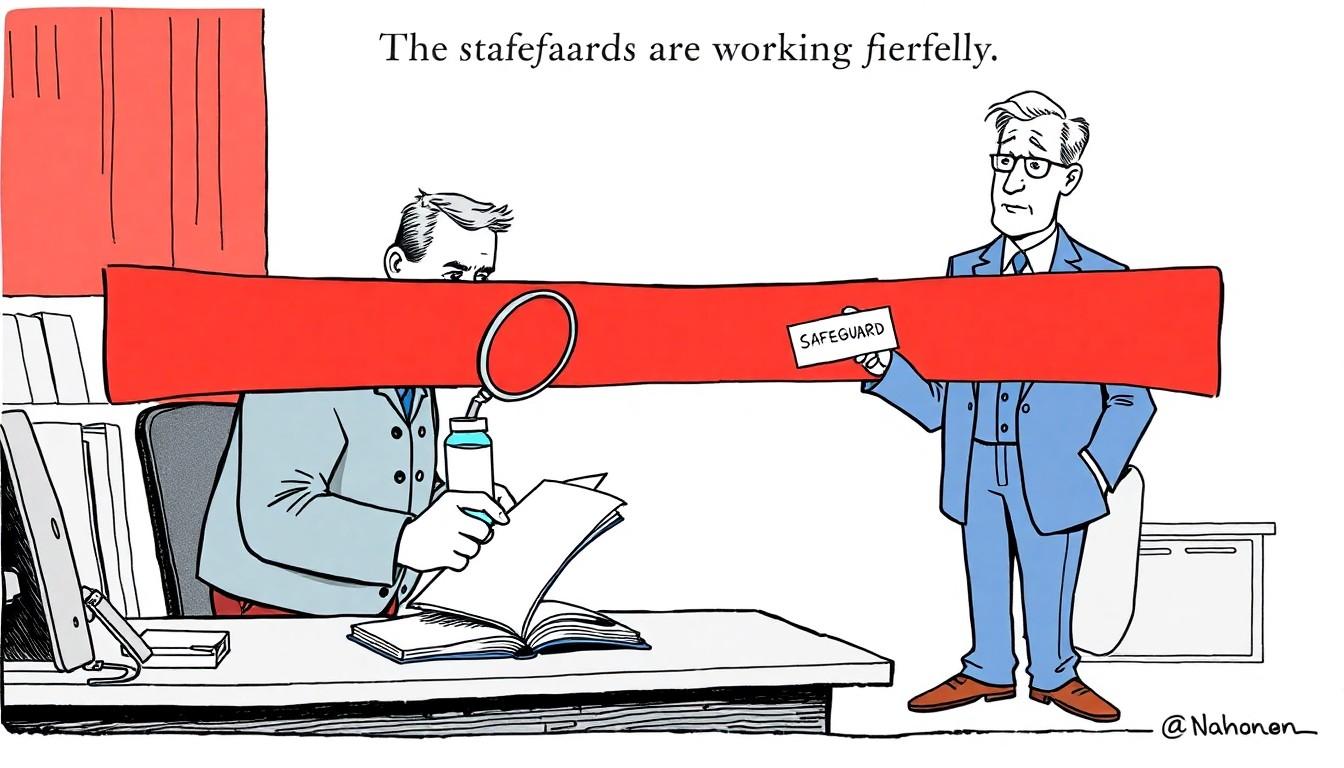
A newsroom’s attempt to examine claims about COVID-19 vaccines was halted by an automated content filter before it produced any findings, raising questions about how safety systems can affect legitimate research as well as harmful activity.
The Channel 51 publication said its initial investigation was to examine claims concerning SV40 DNA sequences, Pfizer and BioNTech patents, and an interview with Moderna chief executive Stéphane Bancel. After the system stopped the work without explaining why, the publisher directed the research team to restart with a narrower review of primary documents. That second report was completed about 14 minutes after the original job began. The publication said a human editor, not the AI system, retained authority over whether the inquiry should be abandoned.
Automated safeguards can serve an important purpose, particularly when tools are used to create sexual images of people without their consent. But the systems that govern what a model will produce are not the same as laws governing what people may make or distribute. StopNCII, for example, allows adults to create a digital fingerprint of an eligible intimate image on their own device. Participating platforms can use that fingerprint to identify matching material; the image itself is not uploaded. The service cautions that it cannot act across the whole internet and depends on participating platforms.
Australian law already addresses some forms of non-consensual sexual imagery. The Criminal Code Amendment (Deepfake Sexual Material) Act 2024, which took effect on 3 September 2024, made it an offence to transmit sexual material of an adult without consent using a carriage service, including material created or altered with technology. The Act provides for a maximum sentence of six years’ imprisonment, with a higher maximum for aggravated offending.
Regulatory action has also targeted the circulation of deepfake images. The eSafety Commissioner reported that the Federal Court ordered Anthony Rotondo to pay a $343,500 civil penalty, plus costs, for posting deepfake images of several high-profile Australian women. Separately, eSafety’s annual report says the agency received more than 9,000 reports of image-based abuse in 2025–26 and provided support in 96 per cent of actionable cases. Those figures describe reports and agency support; they should not be read as a count of proven offences or successful removals.
A broader proposal, the Online Safety Amendment (Digital Duty of Care) Bill 2026, would place a duty on online service providers to address serious harms. The Senate referred the Bill to a committee in October, which received 182 submissions and held public hearings in Canberra. The committee process forms part of the Bill’s parliamentary consideration; it does not mean the proposed duty is already law.
The contrast is central to the debate: a filter may block a legitimate inquiry without giving a reason, while safeguards against intimate-image abuse are intended to prevent serious harm. The question is not simply whether automated systems should refuse some requests, but how accurately they distinguish between uses, and what recourse exists when they get that distinction wrong. In the newsroom’s account, the response was to narrow the research and rely on official records, while leaving the editorial decision to a human.
Source Reference Map
Inspired by headline at: [1]
Sources by paragraph:
- Paragraph 1: [2]
- Paragraph 2: [2]
- Paragraph 3: [6]
- Paragraph 4: [3]
- Paragraph 5: [4], [5]
- Paragraph 6: [2]
- Paragraph 7: [3], [6]
Source: Noah Wire Services