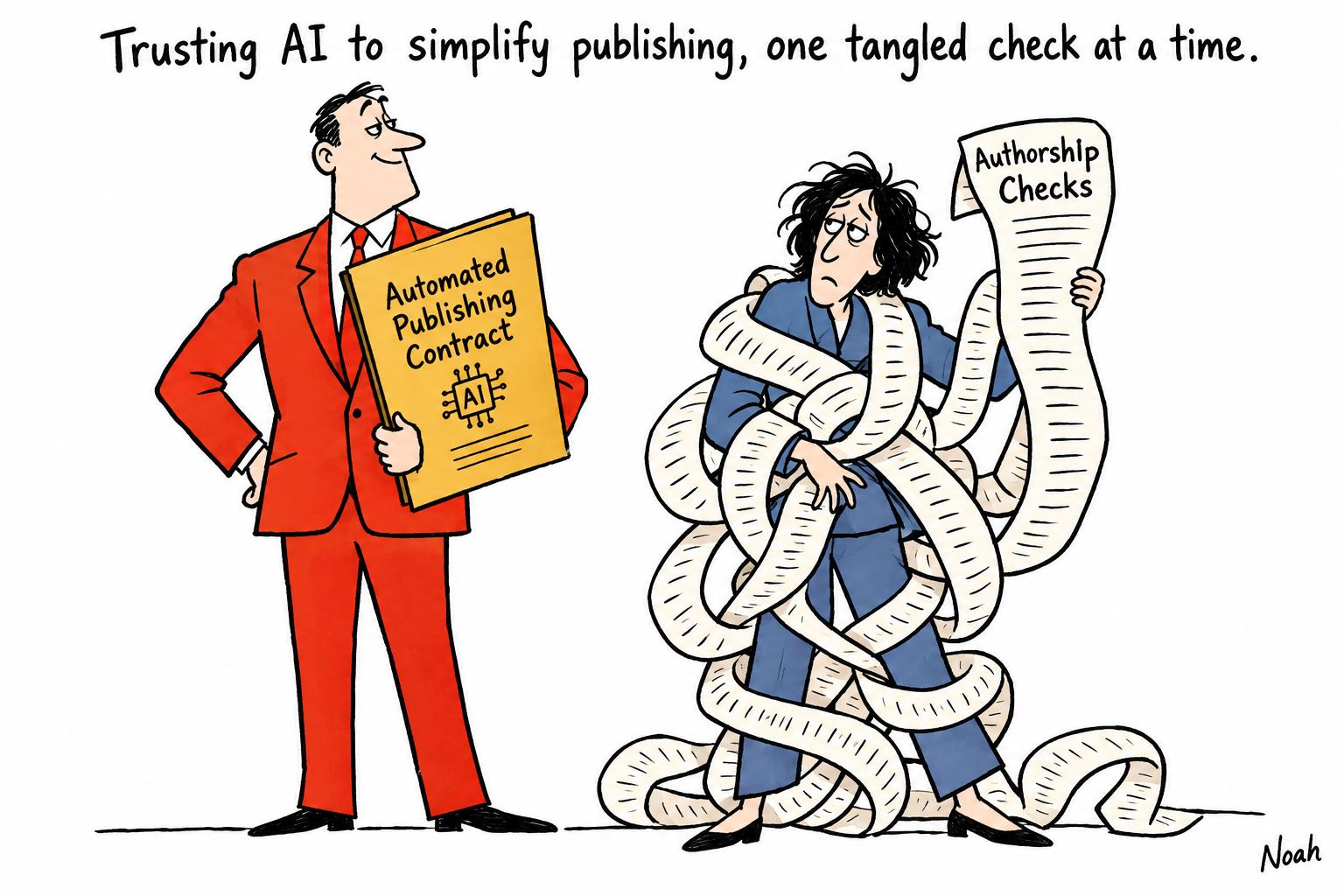
In Spain and across the wider Spanish-language publishing world, artificial intelligence is no longer only a question of authorship scandals and prize eligibility; it is increasingly woven into the mechanics of publishing itself. Recent controversy around Almadía’s suspension of presentations for "Donde el agua trabaja", after scrutiny by the AI detector Pangram suggested that almost the entire text may have been machine-generated, has sharpened debate about how far publishers can or should trust declarations from authors. The case has also highlighted a growing problem for literary competitions: once a manuscript is in circulation, enforcement often depends on honesty rather than any robust technical guarantee.
That tension is part of the environment in which Antonio J. Rodríguez is building Alighieria, a company founded in 2025 with two engineers and now, he says, working with more than 100 publishers in seven Spanish-speaking countries. Rodríguez, who has moved from writing and editorial assessment into automation, describes the business as a set of tools aimed at the unglamorous but essential tasks of publishing: checking references, catching inconsistencies, handling contracts, rights and royalties, and generally reducing the burden of repetitive work that editors have long had to absorb manually.
The company’s pitch is deliberately cautious. Rodríguez says the software does not replace editorial judgement and is designed to avoid altering the text itself. Instead, it flags anomalies for a human to decide whether to keep or discard. He compares the process to reviewing a dense reference work, where a single volume can contain a tangle of dates, figures and cross-references that would be exhausting to verify line by line. In his view, the value of automation lies in sorting through information, not in making literary decisions. Even when the system is used to generate reading reports, he argues that the final call remains subjective and belongs to the editor.
That distinction matters because publishers are already using artificial intelligence in several different ways. According to the broader picture described in the source material, the first is back-office administration, where resistance is relatively limited because the technology is not signing books or judging manuscripts. The second is translation, where campaigners have urged clearer disclosure when generative tools are used. The third is the most contentious: submissions and prize entries, where accusations of hidden AI use have led to suspensions, verification checks and, in some cases, exclusion from competitions. In the background is a market that remains heavily overproduced, with Spain publishing roughly 100,000 titles a year, a scale that makes efficiency gains attractive even as the industry worries about trust, transparency and the future of human editorial authority.
Source Reference Map
Inspired by headline at: [1]
Sources by paragraph:
Source: Noah Wire Services