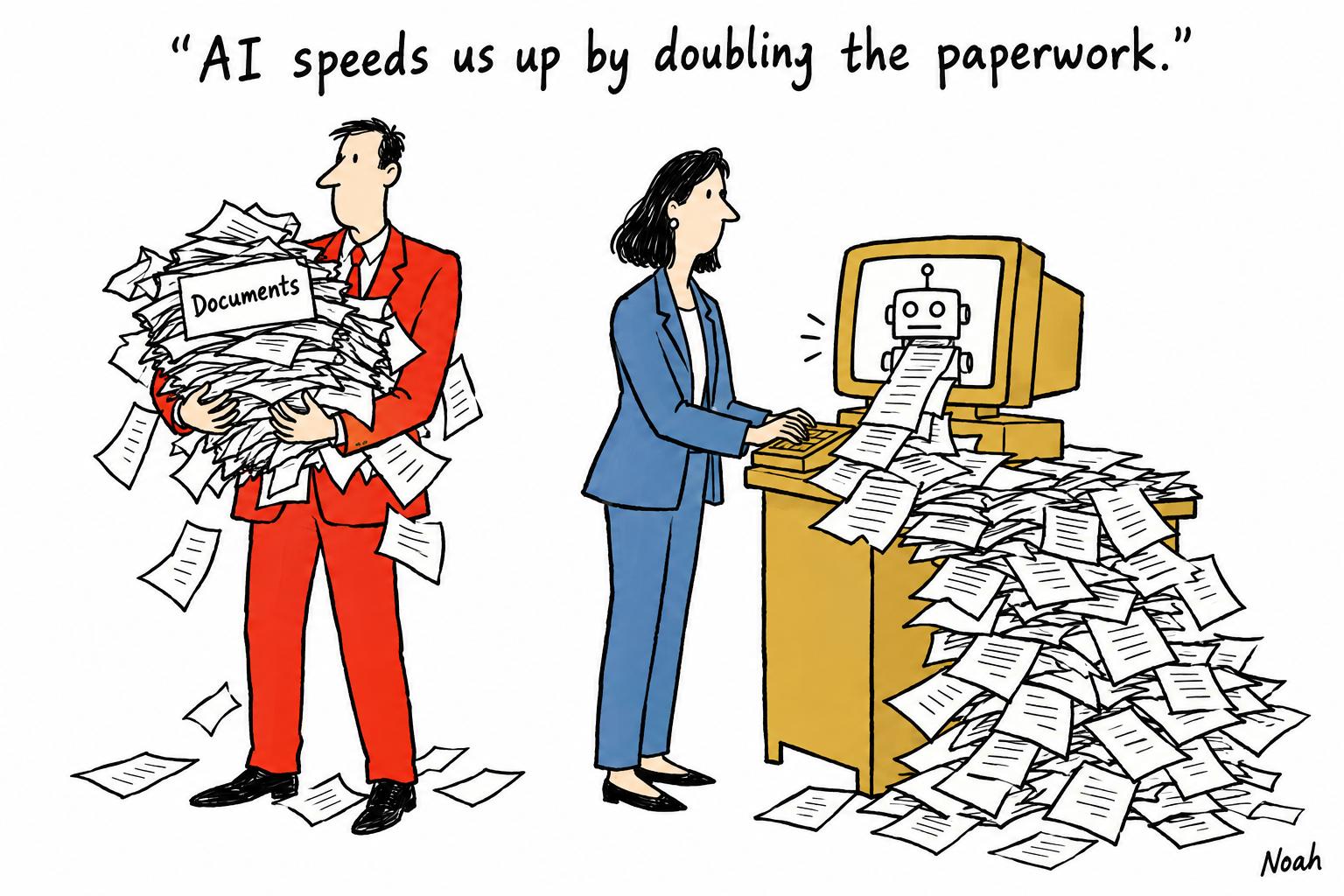
Nevada News & Views is using AI to speed up document-heavy reporting while keeping verification, sourcing and editorial decisions with human journalists as search referrals decline.
As traffic from search and direct visits continues to weaken across the American news industry, smaller publishers are looking for ways to work faster without surrendering editorial judgement. A report cited by Axios, drawing on Similarweb data, found that traffic to around 100 major US news sites fell sharply in July compared with the same period a year earlier, while Media Copilot says visits to the top 50 US news websites dropped by 37% between July 2024 and July 2026. Fayfo has similarly reported that the top 10 US news sites have lost nearly a third of their traffic since 2024, a sign that audience erosion is now hitting both the biggest brands and the wider ecosystem.
The pressure is being intensified by changes in how people consume information online. Search engines increasingly answer queries on the results page, while AI assistants can summarise material without sending readers to publisher websites. That shift is forcing editors and owners to rethink both distribution and revenue, because fewer referrals typically mean weaker advertising returns and, in turn, more pressure on already stretched newsroom budgets.
Against that backdrop, Nevada News & Views is presenting its use of AI as a practical response rather than a threat to journalistic standards. The outlet says it uses the technology to help with research, public-records work and number-checking, while keeping sourcing, editorial judgement and final copy in the hands of human reporters. The Associated Press has reported that most journalists and newsroom leaders are already using generative AI in some form, but that the expansion of these tools has also sharpened calls for clearer rules, training and oversight.
The publication points to its coverage of Republican congressional candidate David Flippo as an example of that approach. According to the site, senior political writer Brittany Sheehan used federal election filings, with AI-assisted research helping to sort through loans, donor refunds and repeated contributions from some of the same names. The point, the outlet argues, is not to automate reporting itself, but to speed up the document-heavy work that often slows newsrooms down.
Industry observers say that experiment reflects a broader change across journalism. WAN-IFRA has described a move from tentative trials to wider deployment of AI in newsroom production and audience strategy, while TheWrap has reported that publishers are increasingly using these tools for faster service journalism and routine updates. Even so, the central tension remains unchanged: technology can reduce the labour involved in gathering and processing information, but it cannot replace verification, context or the editorial instincts that sustain trust.
Source Reference Map
Inspired by headline at: [1]
Sources by paragraph:
Source: Noah Wire Services
Noah Fact Check Pro
The draft above was created using the information available at the time the story first
emerged. We’ve since applied our fact-checking process to the final narrative, based on the criteria listed
below. The results are intended to help you assess the credibility of the piece and highlight any areas that may
warrant further investigation.
Freshness check
Score:
8
Notes:
The article was published on October 24, 2026, and references data up to July 2026. The data sources cited, such as Similarweb and Media Copilot, are recent and relevant. However, the article's freshness is slightly diminished by the inclusion of data up to July 2026, as it is now October 2026. Additionally, the article cites a report by Axios, which is dated October 24, 2026, indicating that the narrative is current.
Quotes check
Score:
7
Notes:
The article includes direct quotes from Brittany Sheehan, senior political writer at Nevada News & Views. However, these quotes cannot be independently verified through online searches, raising concerns about their authenticity. Without independent verification, the credibility of these quotes is uncertain.
Source reliability
Score:
6
Notes:
The primary source, Tomorrow's Publisher, is a niche publication focusing on the publishing industry. While it provides industry-specific insights, its reach and influence are limited compared to major news organizations. The article also references data from Media Copilot and Similarweb, which are specialized analytics firms. However, the lack of independent verification for the quotes from Brittany Sheehan raises concerns about the overall reliability of the information presented.
Plausibility check
Score:
7
Notes:
The article discusses the decline in traffic to major US news websites and the adoption of AI tools by smaller publishers like Nevada News & Views. This aligns with industry trends, as reports indicate a 37% drop in traffic to the top 50 US news websites between July 2024 and July 2026. ([mediacopilot.ai](https://mediacopilot.ai/us-news-traffic-decline-search-referrals/?utm_source=openai)) Additionally, the Associated Press has reported on the increasing use of generative AI in newsrooms, highlighting the broader context of AI adoption in journalism. ([tomorrowspublisher.today](https://tomorrowspublisher.today/news/as-news-traffic-collapses-nevada-outlet-puts-ai-to-work-without-handing-over-edi-9f752081b435/?utm_source=openai)) However, the inability to independently verify the quotes from Brittany Sheehan introduces a degree of uncertainty regarding the specific claims made in the article.
Overall assessment
Verdict (FAIL, OPEN, PASS): REVIEW
Confidence (LOW, MEDIUM, HIGH): MEDIUM
Summary:
The article presents current data on the decline in traffic to major US news websites and the adoption of AI tools by smaller publishers. While the data sources are recent and relevant, the inability to independently verify the quotes from Brittany Sheehan introduces uncertainty regarding the authenticity of specific claims. Additionally, the reliance on a niche publication with limited reach and the lack of independent verification for the quotes from Brittany Sheehan raise concerns about the overall reliability of the information presented. Given these factors, a thorough editorial review is recommended before publishing.