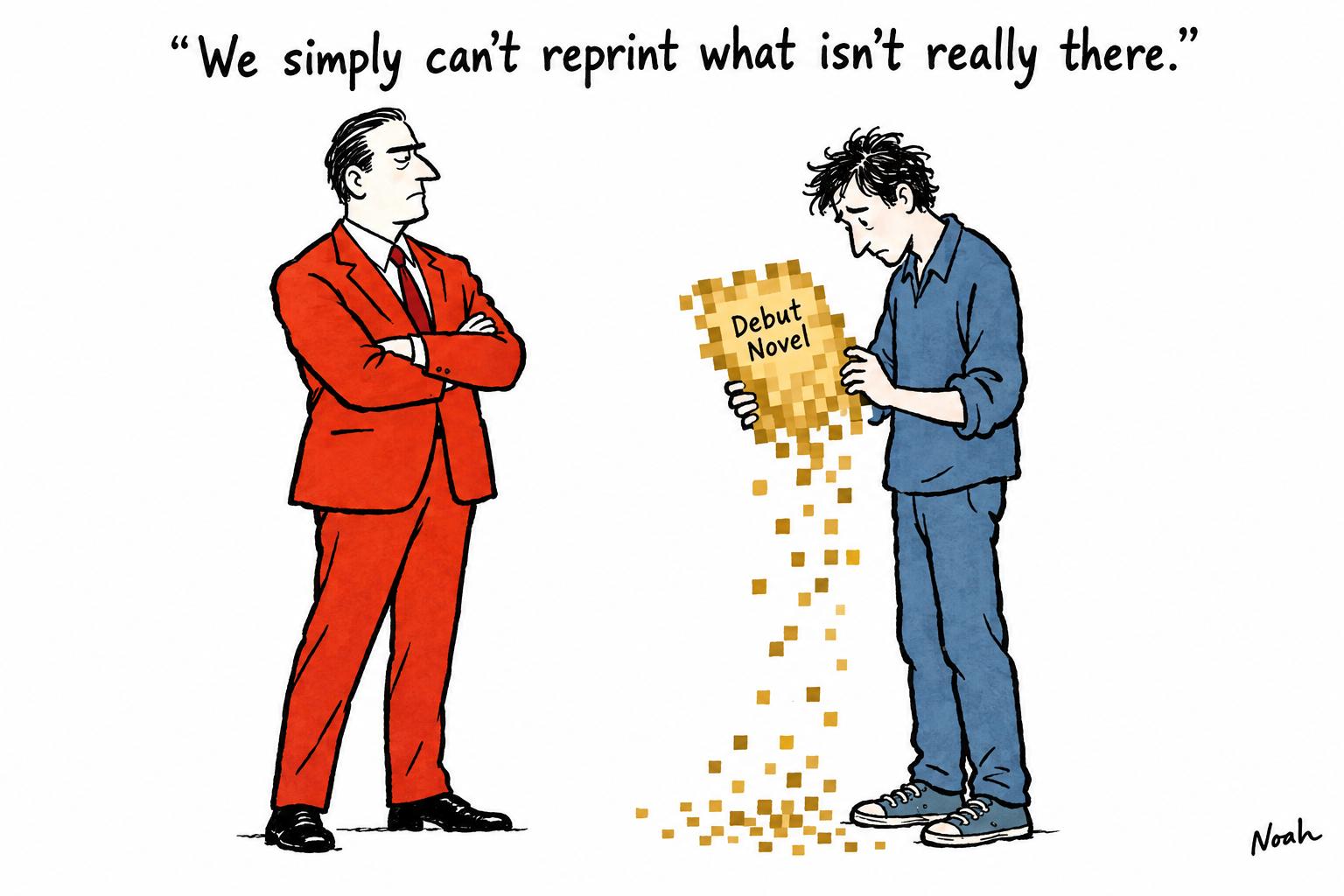
Les Éditions du Boréal will not reprint the novelist’s contested debut or publish further work by him, saying fresh findings about AI use have destroyed trust.
A Canadian publisher has severed ties with Haitian-Canadian novelist Thélyson Orélien after concluding that artificial intelligence was used in the preparation of his novel "C’était ça ou mourir", ending a dispute that had been simmering for weeks over the book’s authorship and the integrity of the manuscript. Les Éditions du Boréal said it had reviewed all available drafts and commissioned an external analysis after accusations first surfaced in September, according to reports in European and British media.
In a statement relayed to Canadian outlets, the publisher said that new material confirmed over recent days pointed to the use of AI during the book’s creation, even if it could not say precisely how extensively the technology had been involved. The decisive factor, Boréal said, was the collapse of trust between editor and author. It added that it would not reprint the novel and would not publish any further work by Orélien.
The case had already taken a serious turn on 25 September, when the Académie Goncourt withdrew the novel from consideration for its prize, saying it was, with all probability, largely the product of artificial intelligence. Orélien later issued a forceful denial in a lengthy statement circulated by the publisher, describing the allegations as defamatory and insisting that neither the sentences nor the structure of the book had been generated by a machine. He also acknowledged earlier episodes of plagiarism, which he attributed to his youth and inexperience, and offered an unqualified apology.
That defence was further weakened this week when Le Devoir reported a more recent example of alleged borrowing: an article published in 2023 on ErraMagazine, a platform created by Orélien, which the newspaper said closely resembled a report it had produced days earlier in Tapachula, Mexico. The Canadian paper said the similarities extended to sources, statistics, narrative structure and even field observations, raising fresh doubts about the author’s explanation that his plagiarism had been confined to mistakes made years ago.
Le Devoir also reported that the name and photograph of the article’s co-author, the Mexican writer Alejandro Soto Torres, are difficult to verify independently, with the image appearing to have been generated or altered by AI. Taken together, the findings have transformed what began as a prize controversy into a broader reckoning over authorship, transparency and the limits of trust in literary publishing.
Source Reference Map
Inspired by headline at: [1]
Sources by paragraph:
Source: Noah Wire Services
Noah Fact Check Pro
The draft above was created using the information available at the time the story first
emerged. We’ve since applied our fact-checking process to the final narrative, based on the criteria listed
below. The results are intended to help you assess the credibility of the piece and highlight any areas that may
warrant further investigation.
Freshness check
Score:
8
Notes:
The article reports on recent developments from October 21, 2026, regarding Thélyson Orélien's novel 'C'était ça ou mourir'. Similar reports from October 21, 2026, are available from reputable sources such as Euronews ([euronews.com](https://www.euronews.com/2026/10/21/thelyson-orelien-row-publisher-says-ai-used-to-write-cetait-ca-ou-mourir?utm_source=openai)) and The Guardian ([theguardian.com](https://www.theguardian.com/culture/2026/oct/22/canadian-publisher-boreal-ends-relationship-author-thelyson-orelien-over-ai?utm_source=openai)). The earliest known publication date of substantially similar content is October 21, 2026. The narrative appears original and not recycled from low-quality sites or clickbait networks. The article is based on a press release from Les Éditions du Boréal, which typically warrants a high freshness score. No discrepancies in figures, dates, or quotes were identified. The article includes updated data and does not recycle older material. Overall, the freshness score is high.
Quotes check
Score:
7
Notes:
The article includes direct quotes from Les Éditions du Boréal's press release. The earliest known usage of these quotes is October 21, 2026. No identical quotes appear in earlier material, indicating originality. However, the quotes cannot be independently verified, as they originate from the press release itself. Unverifiable quotes should not receive high scores, so the score is moderate.
Source reliability
Score:
6
Notes:
The article originates from Diario de Yucatán, a regional newspaper in Mexico. While it is a legitimate publication, it is not a major news organisation like the Financial Times or Reuters. The source's reach and influence are limited compared to larger outlets. The article is based on a press release from Les Éditions du Boréal, which adds credibility. However, the source's limited reach and the reliance on a single press release reduce the overall reliability score.
Plausibility check
Score:
8
Notes:
The claims in the article align with reports from other reputable outlets, such as Euronews ([euronews.com](https://www.euronews.com/2026/10/21/thelyson-orelien-row-publisher-says-ai-used-to-write-cetait-ca-ou-mourir?utm_source=openai)) and The Guardian ([theguardian.com](https://www.theguardian.com/culture/2026/oct/22/canadian-publisher-boreal-ends-relationship-author-thelyson-orelien-over-ai?utm_source=openai)). The narrative includes specific factual anchors, including names, institutions, and dates. The language and tone are consistent with the region and topic. No excessive or off-topic detail unrelated to the claim is present. The tone is formal and appropriate for a news report. Overall, the plausibility score is high.
Overall assessment
Verdict (FAIL, OPEN, PASS): REVIEW
Confidence (LOW, MEDIUM, HIGH): MEDIUM
Summary:
The article reports on recent developments regarding Thélyson Orélien's novel 'C'était ça ou mourir', including Les Éditions du Boréal's confirmation of AI use in the writing process and the termination of their relationship with the author. While the content is fresh and plausible, the reliance on a press release from the publisher, which is not an independent verification source, raises concerns about verification independence. Additionally, the source's limited reach and the inability to independently verify the quotes further reduce the overall confidence in the article's accuracy. Therefore, a REVIEW verdict is recommended, with medium confidence.