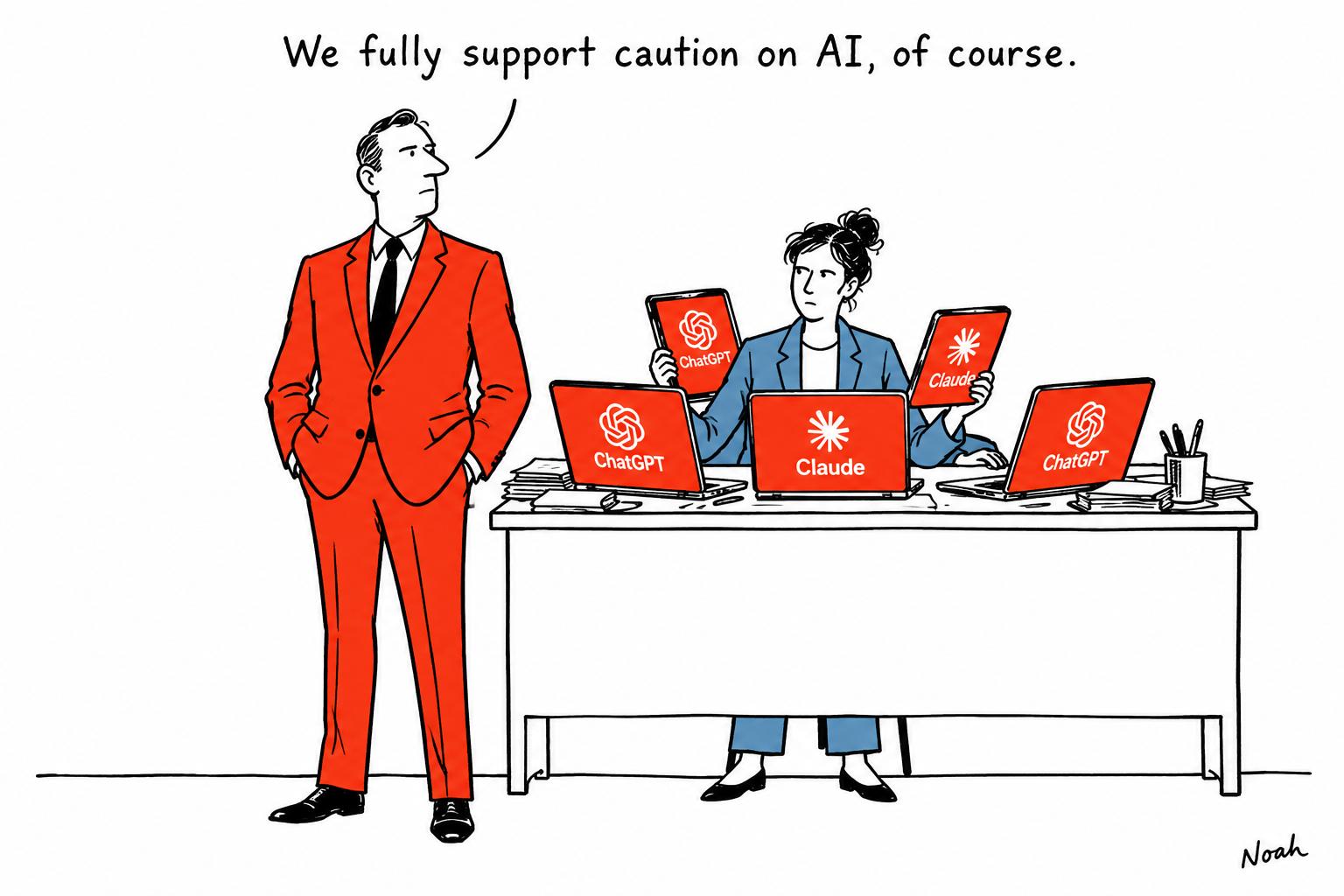
According to reporting by WIRED, some of the world’s biggest book publishers are already using generative AI inside their day-to-day operations, even as the industry has publicly positioned itself as wary of the technology. Employees at HarperCollins, Simon & Schuster and Hachette told the magazine that tools including Claude and ChatGPT are being used for publicity copy, back-cover text, cover concepts, marketing materials and routine email correspondence, sometimes at the urging of managers. The accounts suggest a widening gap between the cautious public rhetoric of large publishers and the practices taking hold behind the scenes.
The workers who spoke to WIRED did so anonymously, saying they feared professional consequences if they were identified. They described a culture in which executives have pushed staff, particularly junior employees, to help normalise the use of AI and identify practical applications for it. At HarperCollins, one current employee said senior leaders bought Claude licences from Anthropic but initially struggled to work out how to deploy them. Staff were then asked to become informal AI advocates and to attend recurring brainstorming sessions aimed at finding uses across the business.
That internal push has not landed well with everyone. Employees told WIRED that when concerns were raised about legal, ethical and environmental risks, one meeting leader dismissed the objections as "the cost of doing business". HarperCollins later added language to its internal AI guidance noting that artificial intelligence does have an environmental impact, but that it forms only a small part of most people’s overall digital carbon footprint. Some employees said they found the move offensive, especially in an industry where entry-level pay remains modest; WIRED cited 2023 data showing the average starting salary for publishing workers at the Big Five and Scholastic in New York City was $47,583.
The report also places the publishers’ internal experimentation in a broader industry context. American publishing houses have spent much of the year publicly resisting generative AI, including through copyright disputes and by withdrawing books suspected of relying on large language models. Yet staffers told WIRED that those headline-grabbing disputes may represent only a fraction of the issue, with some imprints quietly removing books over AI use without any wider announcement. The result, according to the employees interviewed, is an industry under strain: keen to use AI for efficiency and cost reasons, but uneasy about the reputational, creative and labour implications of doing so without clear disclosure or author consent.
Source Reference Map
Inspired by headline at: [1]
Sources by paragraph:
Source: Noah Wire Services