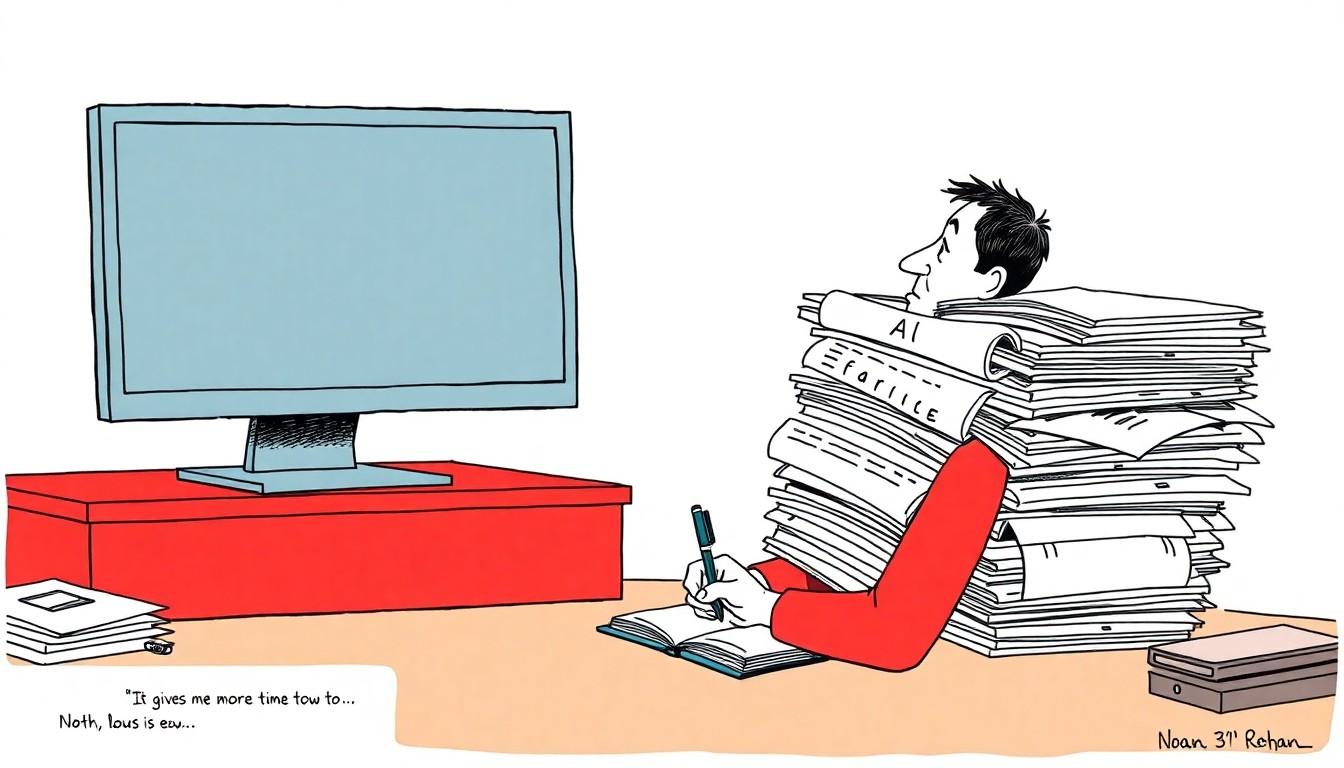
For Jane Friedman, the practical question about artificial intelligence is not whether it is free of controversy, but whether it can help a writer run a business without displacing human judgement. At a recent Author Nation event, she found discussion turning towards that question, even as concerns persist about copyright, training data and the technology’s potential for harm. Friedman argues that writers should understand AI well enough to influence how it is used, rather than treating either adoption or rejection as a universal rule.
Her own experience has made that balance personal: she says she was affected by AI fraud more than three years ago. But she does not regard that harm as proof that the technology has no constructive uses. In her account, a number of AI-assisted projects have reduced routine work and made her publishing resources easier to use. The time savings she describes are her own reported results, not a guarantee that the same workflows will suit every writer.
One example is a redesigned search page for her WordPress site. Without a developer on retainer, Friedman asked Claude to investigate possible approaches and help build a replacement using WordPress’s Block Editor. WordPress documentation explains that the editor lets users assemble pages from elements such as headings, paragraphs and images, arranging them as blocks rather than coding each component from scratch. Friedman says the new page took less than an hour to produce and did not require a paid plugin.
She has also developed JaneBot, a conversational assistant intended to help visitors find material in her books, website and other published documents. Friedman says it was built with Soqratic, whose service offers authors a way to present their expertise through interactive AI personas. The underlying approach, known as retrieval-augmented generation, connects a language model to a selected collection of material: the system retrieves relevant passages and supplies them as context for an answer. IBM’s explanations of RAG make clear that this can ground responses in a specific knowledge base, but does not ensure that every answer will be accurate.
Other projects focus less on readers than on the work behind the scenes. Friedman says Claude helped her group more than 3,400 website comments by topic, examine newsletter subscription data, and turn newsletter issues into draft articles for WordPress. She also uses it to sort questions from online classes, find promised resources in transcripts and summarise course feedback. Anthropic’s documentation lists file formats including CSV, DOCX and PDF, while noting that processing depends on file type, available tools and context limits. Those capabilities provide useful background, but do not independently verify Friedman’s reported time savings.
She has used the assistant to locate teaching materials scattered across years of email, organise past email answers into a searchable reference for her business partner, and assemble an archive of tools recommended in her newsletter. Another scheduled task scans for news that might be relevant to her reporting. Friedman says the briefings often surface stories she already knows about, but occasionally prompt her to include something she might otherwise have missed. WordPress.com also documents a way to connect Claude with a WordPress.com site and access selected site information, though that is a separate product integration and does not establish which method Friedman used.
Friedman says the cumulative effect has been to reclaim time for writing, research and improving resources for her readers. Her conclusion is not that writers must incorporate AI into their creative work, but that each should assess whether it serves a particular need. The technology is likely to feature in tools and services used by publishers and other business partners, she argues, while its place in an individual writer’s practice remains a choice. That choice, in her view, requires a clear understanding of both the problem to be solved and the limits of the tool.
Source Reference Map
Inspired by headline at: [1]
Sources by paragraph:
- Paragraph 1: [2]
- Paragraph 2: [2]
- Paragraph 3: [2], [5]
- Paragraph 4: [2], [3], [4], [8]
- Paragraph 5: [2], [6]
- Paragraph 6: [2], [7]
- Paragraph 7: [2]
Source: Noah Wire Services