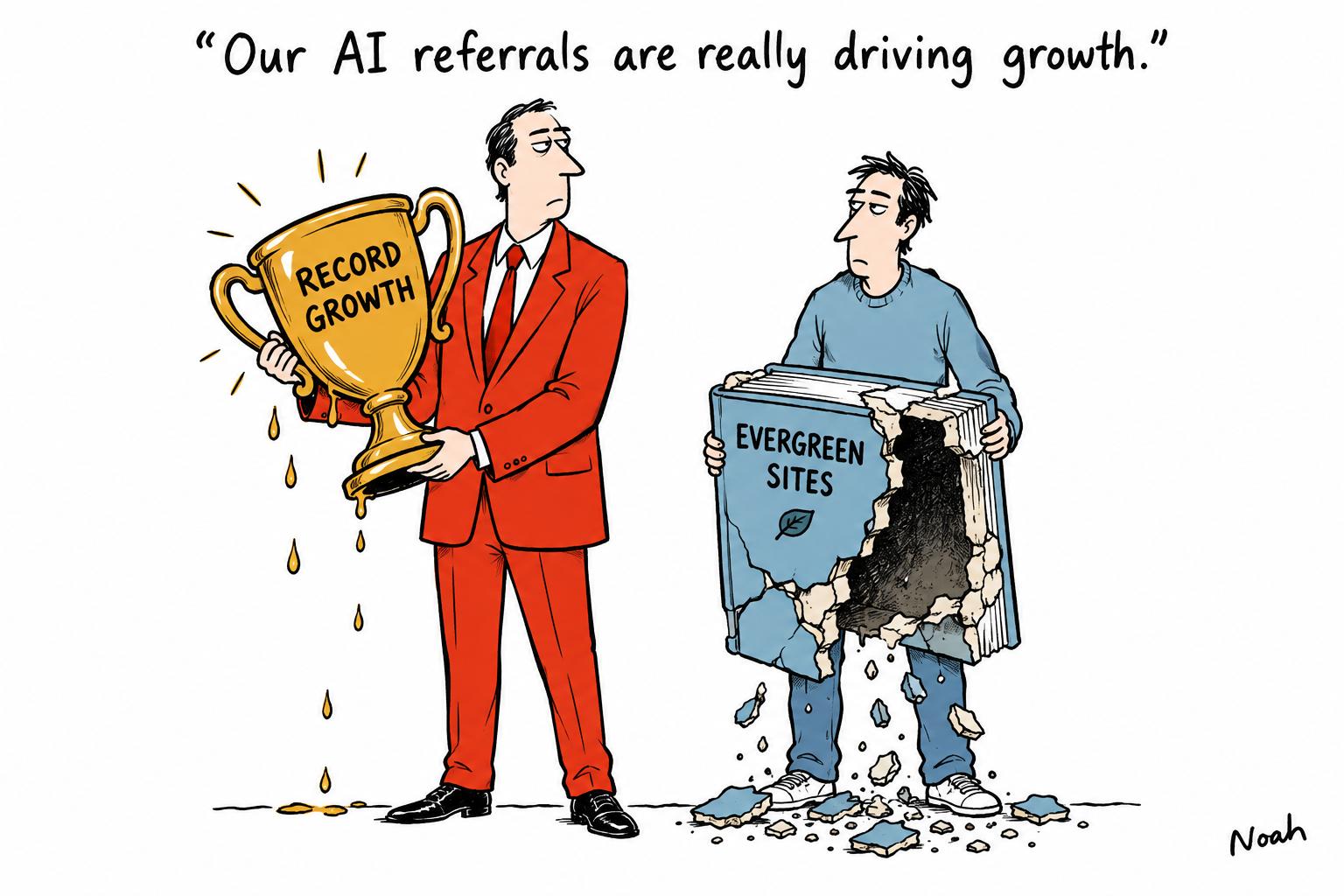
Generative AI is reshaping audience discovery in ways that are both unexpectedly helpful and plainly destructive, according to Mongabay’s founder, Rhett Ayers Butler, who said the environmental news organisation has seen chatbot referrals rise sharply even as its older explanatory sites have been hollowed out. The update comes as recently unsealed court papers have revived concern inside publishing circles that large language models could strip value from original reporting by siphoning off traffic and revenue, with one Microsoft executive reportedly describing the appropriation of online content for AI training as potentially "the largest theft of labor in human history".
For Mongabay, however, the picture is more complicated than simple decline. Butler said ChatGPT had remained among the site’s biggest traffic sources as of December 2025, and visitors arriving from chatbots have continued to display stronger engagement than average. He said they spend around three times longer on a page than users referred by Google Search, while bounce rates are broadly similar and measures such as pages per session and scroll depth are better. That pattern, he argued, reinforces the idea that journalism still serves a function AI cannot replicate: reporting, verification and editorial judgement grounded in direct observation and accountability.
The organisation has also benefited from another AI-adjacent discovery channel. Butler said referrals from Google Discover to Mongabay’s main news sites surged from 9 million in the first seven months of 2025 to 46 million over the same period this year, with some months now accounting for more than 40% of referral traffic. Overall, aggregate traffic to the news operation is up 158% year on year. Nieman Journalism Lab reported earlier this year that Mongabay’s total traffic rose by nearly half in 2025, including a 16% increase in Google Search referrals, suggesting the outlet may be bucking wider anxieties about AI-induced decline.
Yet the gains in news readership mask a severe collapse elsewhere in the organisation’s portfolio. Butler said traffic to his long-running evergreen properties has been devastated since ChatGPT arrived in late 2022, including an almost total fall in visits to a rainforest information site founded in 1999, a 95% decline at a tropical freshwater fish site launched in 2000, and an 85% drop at WildMadagascar, which began in 2004. Those sites, he said, are effectively defunct. Industry reporting has echoed the broader concern that AI systems can summarise what already exists while weakening the incentive for users to visit the source material, a dynamic that threatens publishers whose value lies in durable reference content rather than breaking news.
That tension is at the centre of the wider debate over AI and journalism. A December 2025 piece on Mongabay argued that audiences increasingly rely on trusted institutions, transparent sourcing and original reporting as synthetic content becomes harder to spot. Another report on the organisation said its strategy of allowing AI systems to use its environmental coverage had helped expand reach rather than suppress it, while a separate analysis in 2026 estimated that AI traffic across the web is growing far faster than human traffic. Butler’s concern is that if enough publishers stop investing in high-quality information because the audience never arrives on their pages, the entire ecosystem that feeds the machines could start to fray.
Source Reference Map
Inspired by headline at: [1]
Sources by paragraph:
- Paragraph 1: [2], [1]
- Paragraph 2: [2], [1]
- Paragraph 3: [4], [6], [1]
- Paragraph 4: [1], [3], [5]
- Paragraph 5: [2], [3], [5]
Source: Noah Wire Services