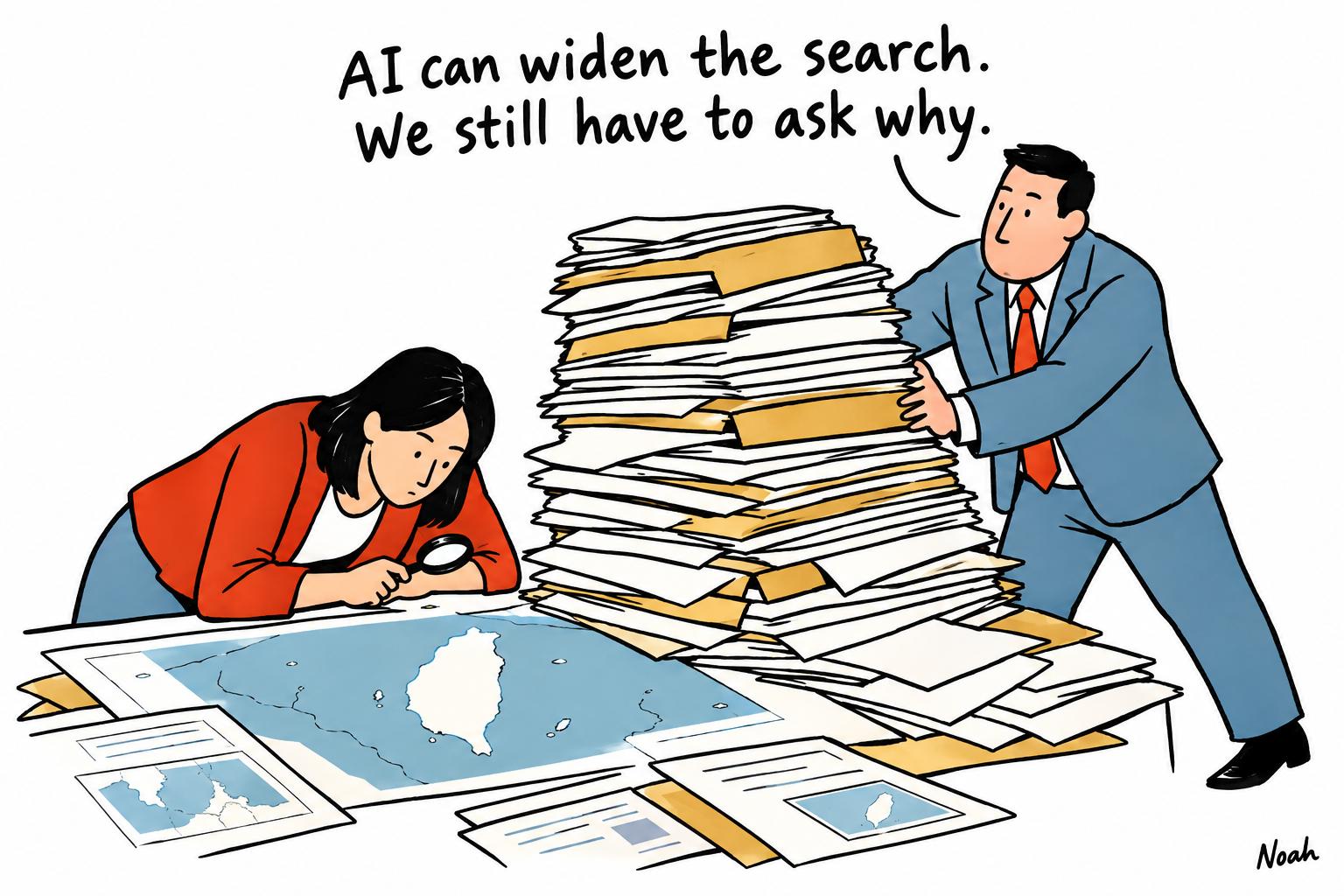
Yi-Shan Chen argues that investigative reporting remains a defining investment for news organisations, even as artificial intelligence reshapes how audiences encounter news. Speaking at WAN-IFRA’s Asian Media Leaders Summit in Singapore, the editor-in-chief of Taiwan’s CommonWealth Magazine said original reporting can demonstrate journalism’s value in ways automated systems cannot. Her case reflects a wider industry response: Nieman Journalism Lab’s account of Reuters Institute research found that many publishers planned to prioritise original journalism and contextual analysis as audiences and distribution move towards AI and online creators.
At CommonWealth, Chen said, the investigations that drew the largest audiences were not produced by a specialist investigative desk. Instead, journalists from across the newsroom were encouraged to raise early leads and test ideas through open discussion. Projects judged worth pursuing received sufficient resources to make a meaningful contribution, she said. That approach is particularly relevant for smaller publishers, which may need to concentrate investment on a limited number of beats rather than attempt comprehensive coverage.
One project brought the newsroom together with researchers at Taiwan’s Academia Sinica to examine more than a decade of Chinese state television footage of Xi Jinping. The team used AI to assess his appearance, speech and gait, concluding that although he seemed thinner at the 2025 military parade, his health appeared stable for his age. A separate investigation began with a reporter’s question about the aircraft heard over Tainan: CommonWealth’s team initially logged flight routes and aircraft types by hand from daily Ministry of National Defense PDFs. The magazine’s online tracker now combines open-source aircraft and vessel information, official releases and satellite imagery, with updates every 24 hours and a timeline that places movements alongside major regional events.
The aircraft-monitoring work developed into a wider effort to understand activity around Taiwan and the First Island Chain. After AI automated much of the mapping and data entry, the project expanded to include information from Japan and the Philippines. CommonWealth later applied large-scale vessel tracking to China Coast Guard activity, analysing more than 1.8 billion signals and comparing its findings with data and analysis from other organisations, including the CSIS Futures Lab. In its own account of the work, the magazine describes Chinese government vessels operating across disputed waters, while stressing a pattern of persistent activity rather than treating every movement as evidence of imminent conflict.
Independent analysis offers broader context for the monitoring effort. A CSIS study of activity from 2020 to 2025 found that the daily average of distinct China Coast Guard vessels entering Taiwan’s near waters had risen by more than 500 per cent. The think tank interprets the increase as part of sustained pressure on Taiwan, though its analysis does not establish the purpose of every individual movement. CommonWealth’s tracking project likewise illustrates how a long-running data record can help audiences compare military and maritime activity with political events, rather than viewing each development in isolation.
Chen’s broader point is that technology can expand the scale of reporting, but cannot decide which questions matter. She said curiosity, research methods and editorial judgement remain central, and urged newsrooms to seek expertise beyond their own staff, including from data companies, non-governmental organisations and cybersecurity researchers. Long-term investigations, she argued, can give audiences historical perspective and help resist alarmist coverage. For publishers under pressure to distinguish their work in an AI-driven media environment, CommonWealth’s experience suggests that the durable advantage lies not in the tools alone, but in the newsroom’s capacity to use them with purpose.
Source Reference Map
Inspired by headline at: [1]
Sources by paragraph:
- Paragraph 1: [5]
- Paragraph 2: [2]
- Paragraph 3: [3]
- Paragraph 4: [4], [7]
- Paragraph 5: [6]
- Paragraph 6: [2], [5]
Source: Noah Wire Services