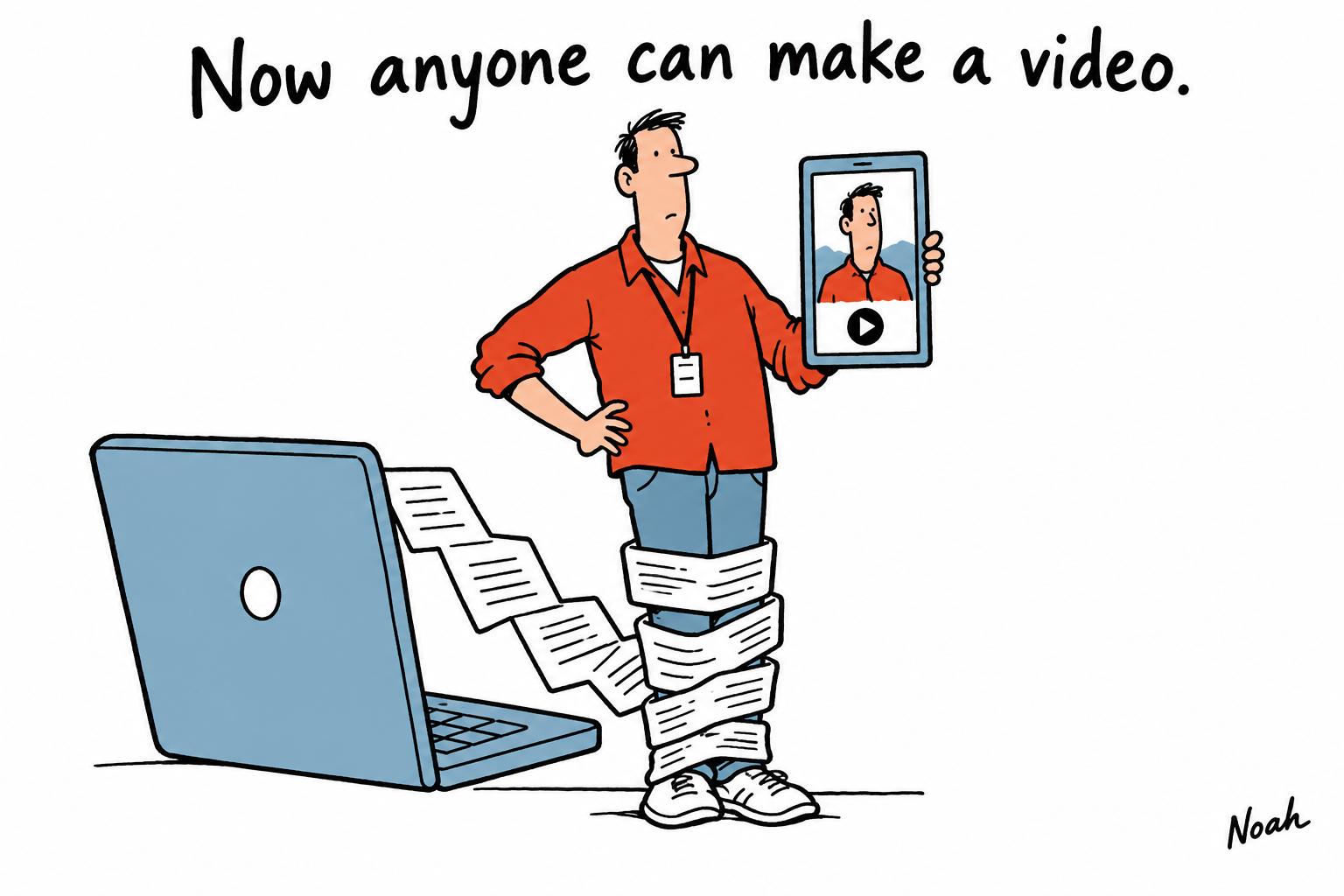
A-lehdet, the Finnish media group, is using an AI-assisted script creator to help journalists turn articles and interviews into short videos for social media. The tool proposes a structure for each script, including an opening designed to draw viewers in, reducing some of the work involved in adapting written journalism for mobile formats.
Executive producer Milla Kukkonen developed the first working version in Google AI Studio, seeking feedback from editorial colleagues as she went. Its functions have since been moved into ChatGPT, the AI environment used across the company. Kukkonen told WAN-IFRA that the speed of developing the prototype was energising.
The project reflects A-lehdet’s push to expand mobile video and make production less dependent on specialist teams. Kukkonen said the company hopes writers will be able to create videos themselves, while the tool could also help freelancers’ work reach audiences on social platforms. With a relatively broad group involved in the organisation’s social content, she estimates that about half of the editorial staff could use it.
The move comes as publishers adapt to audiences’ changing news habits. The Reuters Institute’s 2025 Digital News Report describes the growing role of video and social platforms in news consumption, while noting that patterns vary between markets. In Finland, the report finds comparatively strong use of publishers’ own destinations for video, a reminder that social distribution is only one part of the picture.
A-lehdet began in 1933 with the magazine Apu and remains a family business. Its current activities extend beyond publishing into digital commerce and influencing, according to the company’s profile. That broader organisation provides the setting for Kukkonen’s effort to connect editorial work with technology and new formats.
Kukkonen’s participation in WAN-IFRA’s NextGen AI Leaders programme, supported by the Google News Initiative, helped shape the project and her approach to adoption. The initiative brought together emerging media executives to develop practical AI and leadership skills. Kukkonen told WAN-IFRA that successful implementation depends on shared goals, clear responsibilities and cooperation, not simply the introduction of a new tool.
She also argues that staff need room to discuss doubts about AI, including its potential effects on journalism and meaningful work. That emphasis on editorial responsibility is consistent with Council of Europe guidance, which treats AI in journalism as an issue spanning tool selection, workplace practice and effects on audiences and society. Kukkonen’s advice is to invest in organised learning while keeping sight of journalism’s distinctive contribution: finding and reporting stories that have not yet been brought to light.
Source Reference Map
Inspired by headline at: [1]
Sources by paragraph:
- Paragraph 1: [2]
- Paragraph 2: [2]
- Paragraph 3: [2]
- Paragraph 4: [6]
- Paragraph 5: [3]
- Paragraph 6: [2], [4], [5]
- Paragraph 7: [2], [7]
Source: Noah Wire Services