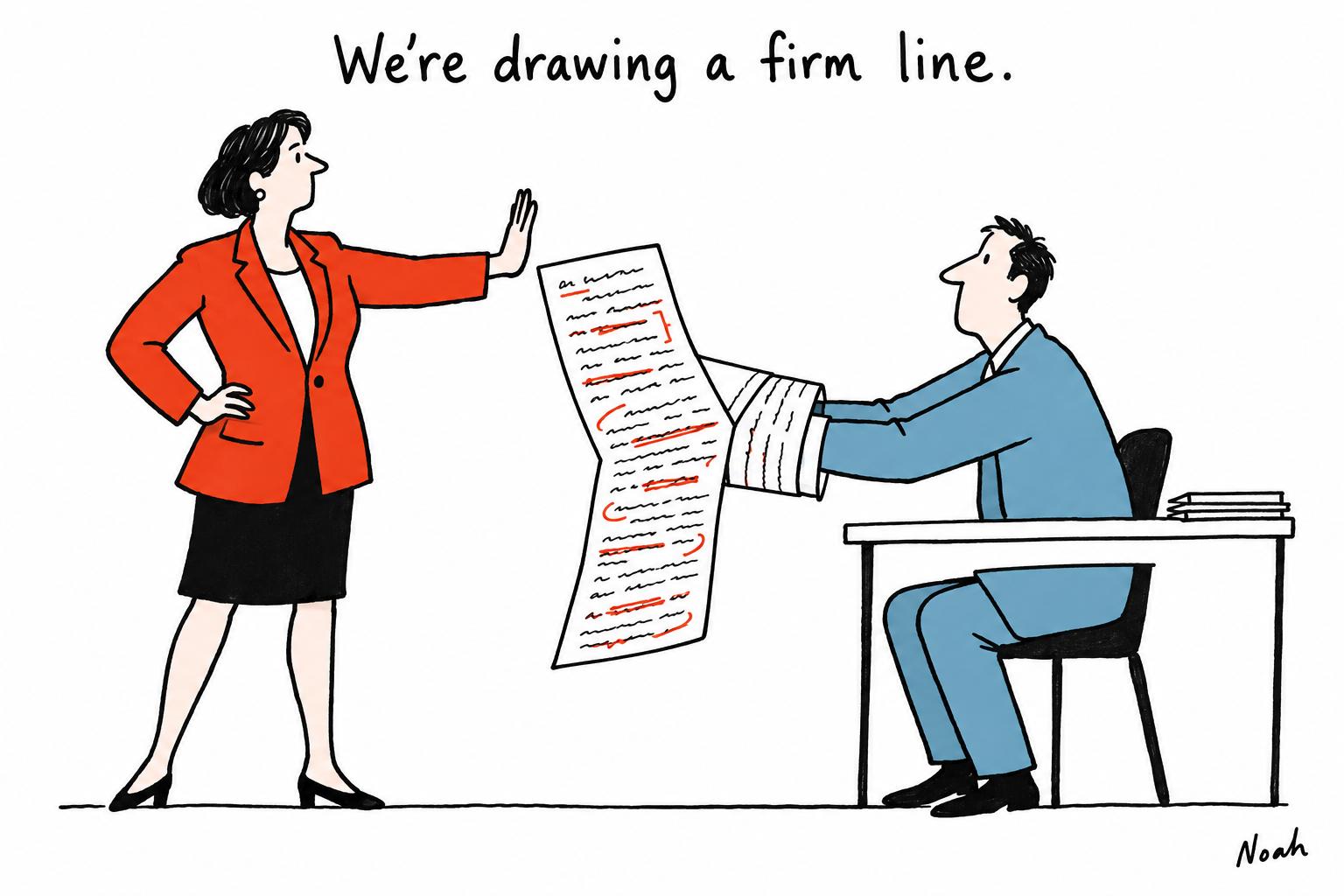
From disputed detection results to stricter submission rules, Nordic newsrooms are grappling with when AI assistance becomes machine-written opinion, and who is accountable for the words readers see.
Artificial intelligence is already changing the way opinion pages are filled, and the awkward question now facing editors is not whether contributors use it, but how much they are allowed to rely on it. At Aftenbladet, Heidi Hjorteland Wigestrand argues that AI can turn a tedious piece into something even more tedious, just at greater speed, and that the real challenge for newsroom gatekeepers is deciding where assistance ends and substitution begins.
Her column reflects a wider uncertainty across Nordic media about what counts as acceptable help. Aftenbladet says it has started using detection tools to get a sense of how widespread AI use is in submitted opinion writing, while also warning that such systems can misread human work. That caution matters, because, as the newspaper notes, one submission from SMB Norge was flagged despite the organisation insisting the text was written by a person.
The debate is not confined to one newsroom. According to Aftenposten, Manifest Media claimed that Pangram identified fully AI-generated language in NRK material, including a memorial piece about businessman Stein Erik Hagen, while also raising questions about other texts linked to former NRK commentator Cecilie Langum Becker. The reporting did not establish those claims as settled fact, but it added fuel to a broader argument about disclosure, editorial standards and the limits of automated detection.
Journalisten, meanwhile, reported that Adresseavisen had to correct ten opinion texts after concerns about extensive AI involvement, with Pangram later assessing nine of the corrected pieces as entirely AI-written and one as almost entirely so. The paper said its internal review found the author had drafted the arguments, but AI had significantly reshaped the final wording. That distinction matters, because it captures the grey zone many editors now have to navigate: an idea may be human, while the prose that reaches readers may be largely machine-made.
Altinget has taken a harder line. Its debate editors have said they became uneasy with the volume of AI-generated submissions across their Nordic editions, arguing that such texts often sound polished but detached, and can weaken the human exchange that opinion pages are meant to foster. In response, the publication introduced clearer rules requiring disclosure of AI use and allowing editors to reject submissions that are almost entirely machine-written, or to ask for a human rewrite instead.
Aftenbladet appears to be moving in the same direction. Wigestrand suggests that the newspaper does not want to ban AI outright, but does want clearer boundaries before the technology becomes so good that it can produce passable readers’ letters on demand. Aftenposten’s newsroom guidance offers one model, stressing that editors remain responsible for everything published and that all final editorial judgements must be made by people. For now, that may be the only workable answer: AI can help shape a submission, but it should not be allowed to erase the voice, judgement and responsibility that make opinion writing worth publishing in the first place.
Source Reference Map
Inspired by headline at: [1]
Sources by paragraph:
- Paragraph 1: [2]
- Paragraph 2: [2]
- Paragraph 3: [3]
- Paragraph 4: [4]
- Paragraph 5: [5]
- Paragraph 6: [2], [7]
Source: Noah Wire Services
Noah Fact Check Pro
The draft above was created using the information available at the time the story first
emerged. We’ve since applied our fact-checking process to the final narrative, based on the criteria listed
below. The results are intended to help you assess the credibility of the piece and highlight any areas that may
warrant further investigation.
Freshness check
Score:
4
Notes:
🕰️ The underlying Aftenbladet commentary was published on 31 October 2026, so the article’s immediate source is recent. However, much of its supporting narrative recycles earlier coverage: Aftenposten reported the Manifest Media/Pangram claims on 15 September 2026, Journalisten reported the Adresseavisen findings on 16 October 2026, and Altinget published its AI-submission rules commentary on 3 June 2026. The September and June material appeared more than seven days before the Aftenbladet piece. This is a newly assembled synthesis of older stories, not wholly new reporting; it should not be presented as a fresh development without that context. ([aftenbladet.no](https://www.aftenbladet.no/meninger/kommentar/i/zlAR1b/kven-skal-faa-skriva-lesarbrev-med-ki))
Quotes check
Score:
4
Notes:
⚠️ The submitted article contains no clearly marked direct quotations, so there are no verbatim quotes to match against earlier publications. Its attributed claims can be traced to the linked Aftenbladet, Aftenposten, Journalisten and Altinget material, but the article paraphrases rather than providing exact wording. This means quote reuse cannot be meaningfully assessed, and the paraphrases should be checked against the original articles before publication. Some underlying claims—especially AI-detector results—are reported as assessments by Pangram or Manifest Media, not independently established facts. ([aftenbladet.no](https://www.aftenbladet.no/meninger/kommentar/i/zlAR1b/kven-skal-faa-skriva-lesarbrev-med-ki))
Source reliability
Score:
6
Notes:
⚠️ The named outlets and individuals are verifiable, and the primary Aftenbladet piece is by journalist Heidi Hjorteland Wigestrand. However, the source article explicitly labels itself a comment and says it presents the author’s opinions and analysis, rather than straight news. The NRK allegations originate with Manifest Media’s own investigation and Pangram tests; Aftenposten and Journalisten report those allegations but do not thereby independently establish that the texts were AI-written. The article should preserve that distinction and avoid presenting detector scores as proof. ([aftenbladet.no](https://www.aftenbladet.no/meninger/kommentar/i/zlAR1b/kven-skal-faa-skriva-lesarbrev-med-ki))
Plausibility check
Score:
6
Notes:
⚠️ The named events and organisations are supported by the cited publications, but the article’s central claims rely substantially on AI-detection results and accounts from interested parties. Aftenbladet itself reports a submission from SMB Norge was flagged despite the organisation’s assertion that it was human-written, illustrating a material limitation. Journalisten reports Pangram’s scores alongside the author’s and editor’s explanations that human drafts were heavily rewritten; those scores do not by themselves settle authorship. The article generally signals that the NRK claims are unsettled, but editors should verify all figures, dates and qualifications against the original reports. ([aftenbladet.no](https://www.aftenbladet.no/meninger/kommentar/i/zlAR1b/kven-skal-faa-skriva-lesarbrev-med-ki))
Overall assessment
Verdict (FAIL, OPEN, PASS): REVIEW
Confidence (LOW, MEDIUM, HIGH): HIGH
Summary:
🔎 REVIEW is warranted. The Aftenbladet source is a clearly labelled opinion comment, and the submitted article is a derivative synthesis of that commentary and earlier reporting rather than wholly original, fresh news. 🕰️ Several key examples pre-date the lead article by more than seven days, including the September NRK/Manifest Media story and June Altinget policy commentary. ⚠️ Important claims depend on Pangram detector scores and interested parties’ accounts; those scores are not conclusive proof of authorship, and the source material itself documents a false-positive concern. 🔒 The Aftenposten supporting report is subscriber-only, triggering the paywall review guidance. The named sources and events are traceable, but source independence is limited and the submitted paraphrases should be checked against accessible original reporting before publication. ([aftenbladet.no](https://www.aftenbladet.no/meninger/kommentar/i/zlAR1b/kven-skal-faa-skriva-lesarbrev-med-ki))