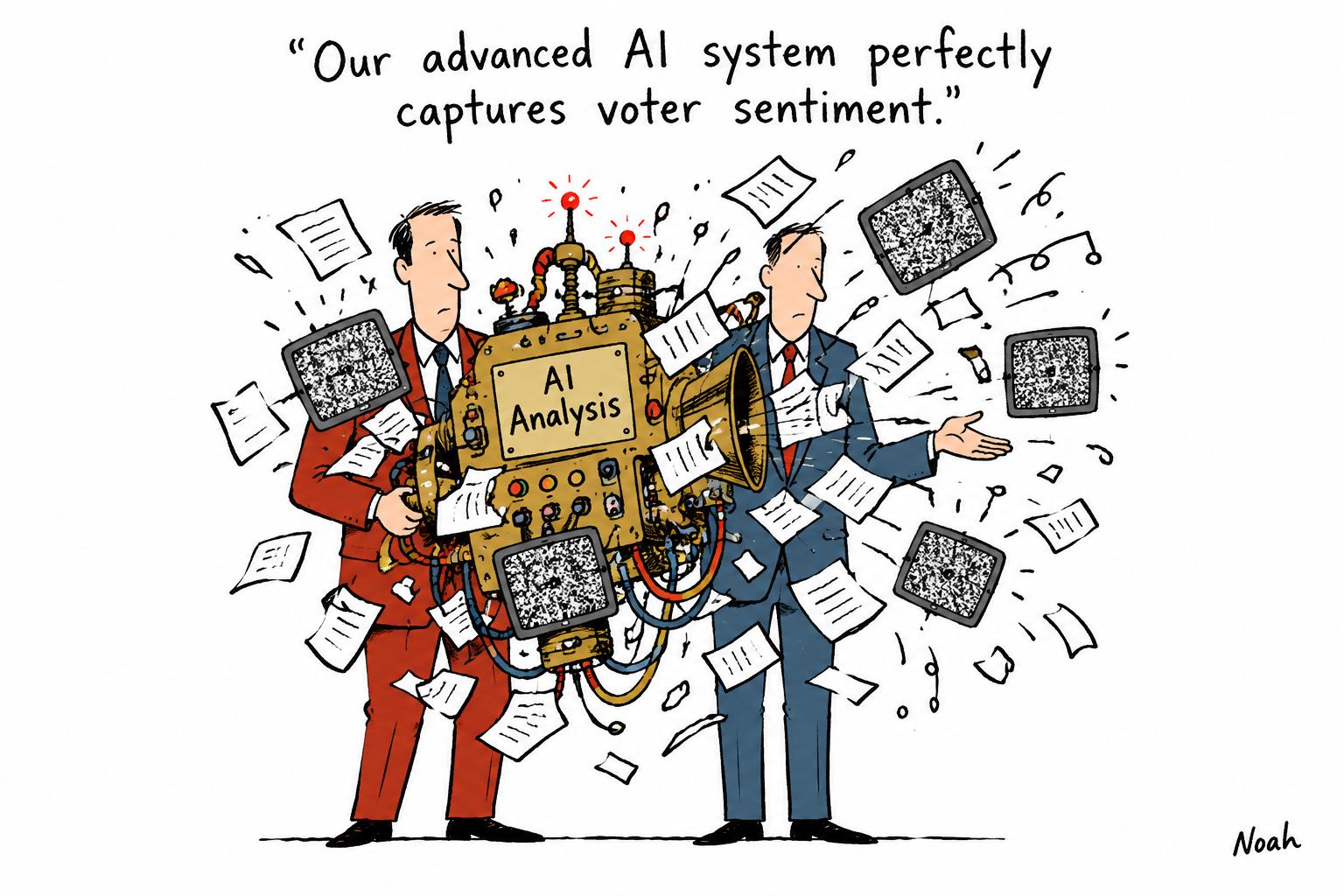
The Journal has begun publishing findings from Doppler News AI, a system that analyses millions of videos, podcasts and news segments to reveal political concerns conventional polling may miss.
The Wall Street Journal has published its first article built with the help of a proprietary artificial intelligence system called Doppler News AI, according to reporting by Andrew Deck of Nieman Lab cited by Talking Biz News. The tool was created to strengthen the paper’s coverage of the US midterm elections by drawing on a far broader range of online material than traditional polling or beat reporting can easily capture.
According to the report, Doppler has already processed more than 25 million TikTok videos, about 500,000 podcast episodes, and thousands of Instagram clips and cable news segments. The Journal uses the system to spot recurring themes across the internet and to identify voters’ priorities, anxieties and sentiments that may not surface in conventional surveys. Aja Whitaker-Moore, the Journal’s deputy editor-in-chief, said the aim was not to forecast the result of the election, but to better understand how people encounter politics through culture, work, money, family and community. “We’re taking a massive set of information…and telling you, from a statistical standpoint: ‘Here’s what people are talking about. Here are the questions they’re asking. Here are the places where those conversations are happening.” she said.
The Journal’s approach reflects a wider shift in newsrooms experimenting with AI as a reporting aid, rather than merely a production shortcut. Other outlets have used large language models to sift through “manosphere” podcasts, school board meetings and local radio programmes, helping journalists surface leads from huge volumes of audio and video. What sets Doppler apart, according to Nieman Lab’s account, is that the Journal is not limiting the technology to internal research or background monitoring; it is using large-scale automated analysis to produce findings that are then published for readers. That makes the project not just a newsroom efficiency tool, but a direct editorial product, and a notable example of how AI is beginning to shape the way major publications gather and present political insight.
Source Reference Map
Inspired by headline at: [1]
Sources by paragraph:
- Paragraph 1: [1]
- Paragraph 2: [1]
- Paragraph 3: [1]
Source: Noah Wire Services
Noah Fact Check Pro
The draft above was created using the information available at the time the story first
emerged. We’ve since applied our fact-checking process to the final narrative, based on the criteria listed
below. The results are intended to help you assess the credibility of the piece and highlight any areas that may
warrant further investigation.
Freshness check
Score:
8
Notes:
The article reports on the Wall Street Journal's deployment of 'Doppler News AI' to analyse vast amounts of online content for midterm election coverage. The earliest known publication date of this information is October 21, 2026, as reported by Nieman Lab. ([niemanlab.org](https://www.niemanlab.org/2026/10/the-wall-street-journals-new-ai-tool-doppler-forecasts-the-issues-that-will-shape-the-midterm-elections/?utm_source=openai)) The article was published on October 22, 2026, indicating timely reporting. However, the reliance on a single source raises concerns about the originality and independence of the content. The Nieman Lab article is cited as the primary source, suggesting that the information may have been republished without significant independent verification. This lack of independent sourcing diminishes the freshness score. Additionally, the Nieman Lab article itself cites Talking Biz News, which in turn references Nieman Lab, indicating a potential recycling of content. This chain of citations further questions the originality and independence of the reporting. Given these factors, the freshness score is reduced to 8.
Quotes check
Score:
6
Notes:
The article includes a direct quote from Aja Whitaker-Moore, the Journal’s deputy editor-in-chief, stating the aim of the AI tool is not to forecast election results but to understand how people encounter politics through various aspects of life. This quote is attributed to the Nieman Lab article. However, the Nieman Lab article does not provide a direct link to the original source of the quote, making independent verification challenging. Without access to the original source, the authenticity of the quote cannot be confirmed, raising concerns about its accuracy. The reliance on a single, unverified source for this quote diminishes the credibility of the reporting. Given these issues, the quotes check score is reduced to 6.
Source reliability
Score:
5
Notes:
The article relies heavily on a Nieman Lab report, which in turn cites Talking Biz News. Nieman Lab is a reputable source for journalism-related news, but the reliance on a single source without independent verification raises concerns about the reliability of the information. The lack of direct access to the original Wall Street Journal article or official press releases further diminishes the reliability score. Given these factors, the source reliability score is reduced to 5.
Plausibility check
Score:
7
Notes:
The concept of a major news organisation like the Wall Street Journal deploying an AI tool to analyse vast amounts of online content for election coverage is plausible and aligns with current trends in media and technology. However, the lack of direct access to the original Wall Street Journal article or official press releases makes it difficult to verify specific details, such as the exact capabilities of the AI tool and its implementation. This lack of direct information raises questions about the accuracy of the reported claims. Given these uncertainties, the plausibility score is reduced to 7.
Overall assessment
Verdict (FAIL, OPEN, PASS): REVIEW
Confidence (LOW, MEDIUM, HIGH): MEDIUM
Summary:
The article reports on the Wall Street Journal's deployment of 'Doppler News AI' to analyse online content for midterm election coverage. However, the heavy reliance on a single, unverified source (Nieman Lab), the lack of direct access to the original Wall Street Journal article or official press releases, and the inability to independently verify quotes and specific details raise significant concerns about the accuracy, originality, and independence of the reporting. Given these issues, a REVIEW verdict is warranted.