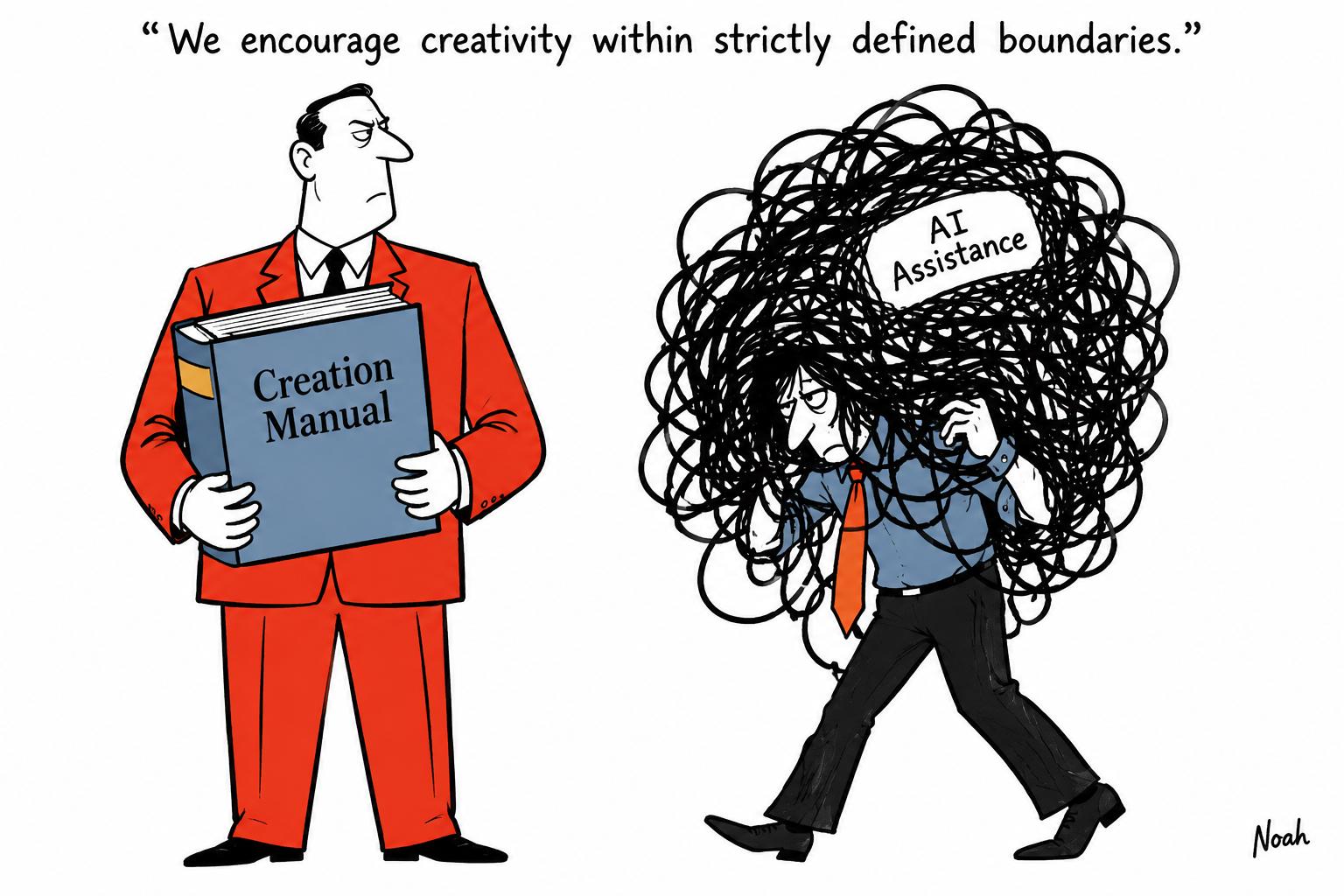
SSPai has overhauled its long-running creation manual in a bid to make its editorial standards clearer, more consistent and better adapted to the realities of modern online publishing. The revised guide, built on the previous version launched four years ago, is intended to help contributors understand not just what the platform expects from them, but also how editors assess whether a piece should simply be published, featured or promoted to the home page. According to the update, the manual has also been refreshed to reflect changes in submission routes, author agreements and the site’s evolving approach to AI-assisted writing.
A central change is the introduction of formal review rules, which SSPai says now set out the standards for editorial judgement in writing rather than leaving contributors to infer them from broad principles. The new framework is designed to explain why some pieces are featured and others are not, and to reduce the back-and-forth that arose when authors were unclear about how their work might be treated. The site says it now evaluates submissions from the perspective of a “general reader”, meaning someone with broadly typical interests and reasonable reading ability, but not necessarily specialist knowledge. Under that approach, an article must be accessible and rewarding to that reader if it is to qualify for stronger placement.
That reader-centred standard is especially visible in the platform’s treatment of travel writing. SSPai says a well-structured trip report with clear, image-rich storytelling may be suitable for selection, but a home-page slot depends on additional factors such as visual quality, length, fluency and whether the piece feels repetitive alongside other recent coverage. In other words, a conscientious account of a popular destination is not automatically enough. The company also encourages writers to browse older, well-received articles and comment threads before pitching a topic, so they can gauge what the audience already knows and what it is likely to value.
The most substantial tightening concerns AI-generated material. SSPai says it has seen a sharp rise in submissions with obvious AI involvement, including entirely machine-generated drafts, and has responded by narrowing what it will accept. If a post is wholly produced by AI, it will usually be returned without processing, while new users publishing low-quality AI content may have their accounts disabled without warning. At the same time, the revised rules stop short of banning AI assistance altogether. The platform says it remains open to reasonable uses such as polishing language or smoothing transitions, provided authors are honest, accurate and transparent about how AI was used.
The updated rules also take a more nuanced view of AI-created substantial content. SSPai now only prohibits AI from producing the core substance of a work, such as the main argument, narrative detail or distinctive expressive style, while allowing more limited forms of assistance. Authors are no longer expected to list prompts or every step of their editing process; instead, they need only disclose the tool used, how it was applied, why it was used and how extensively it was involved. The site says this reflects the variety of current AI products and workflows, as well as the difficulty of enforcing more granular reporting requirements in practice.
Even where AI has played a substantial role, SSPai says it may still allow publication in exceptional cases where the motive is not dishonest, the result would interest ordinary readers and the piece would not be mistaken for fully original work. That approach, the company says, is meant to distinguish between opportunistic use of AI for spam, promotion or content recycling and cases in which a less experienced writer uses the technology to express a genuine idea. Alongside the AI revisions, the manual has also been updated for style guidance, author terms, participation routes, payment rules and the site’s move from MkDocs to Hugo. SSPai says the manual remains available under a CC BY 4.0 licence and is still meant to signal respect for careful writing at a time when polished text is easier than ever to generate.
Source Reference Map
Inspired by headline at: [1]
Sources by paragraph:
- Paragraph 1: [2], [3]
- Paragraph 2: [2], [4]
- Paragraph 3: [2], [5]
- Paragraph 4: [2], [6]
- Paragraph 5: [2], [7]
Source: Noah Wire Services