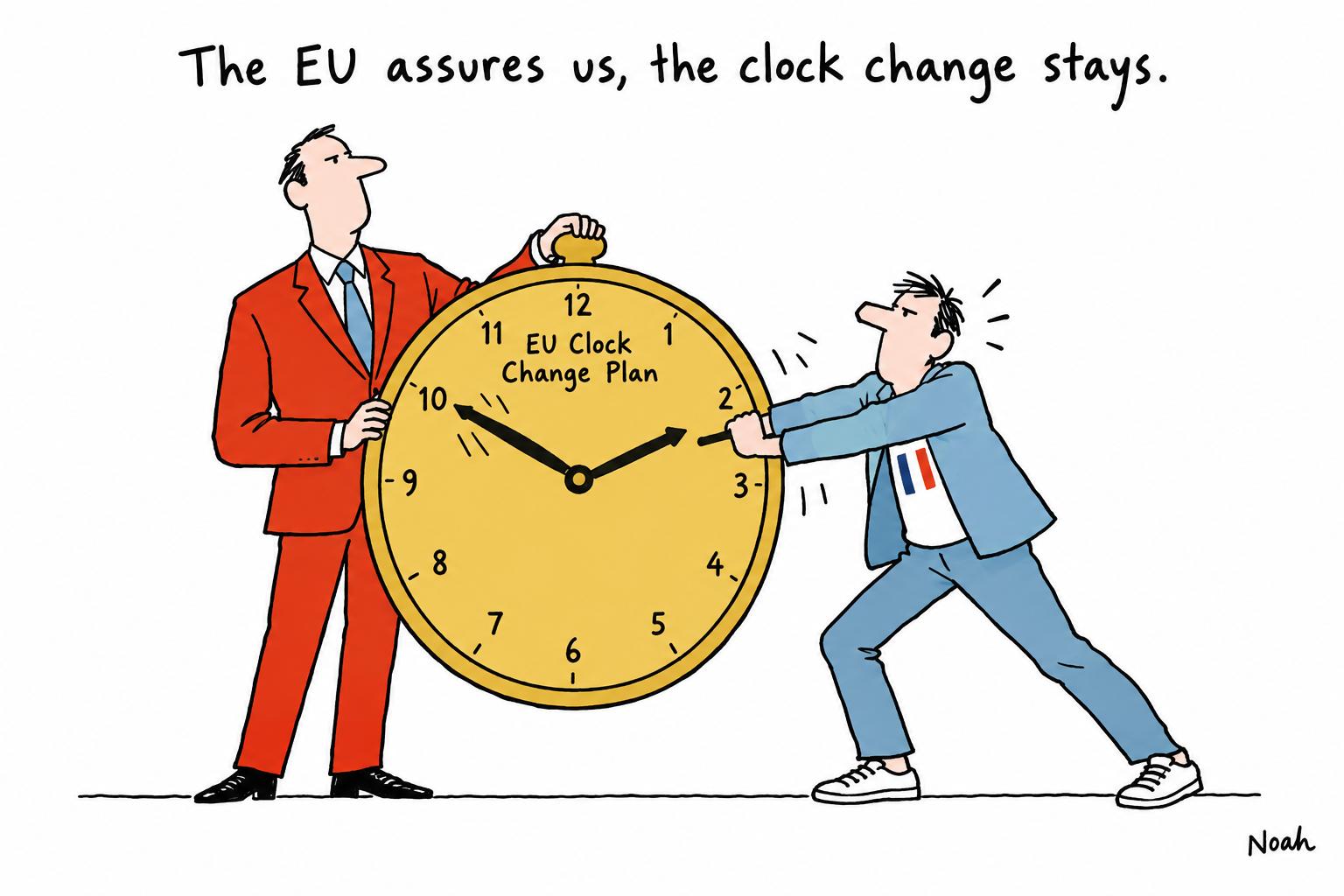
France and the rest of the European Union will gain an hour in bed on 25 October 2026, as the long-debated plan to end seasonal clock changes remains stalled.
France and the rest of the European Union will turn the clocks back in the night of Saturday 24 to Sunday 25 October 2026, moving from 3.00am to 2.00am and giving households an extra hour in bed, according to the French government’s service-public website. The change arrives on the last Sunday of October, which in 2026 falls on the earliest possible date for the seasonal switch.
The practice dates back to the oil shock of 1973-74, when governments were looking for ways to curb energy consumption. According to service-public, the system was later harmonised across the European Union in 1998, but the long-promised plan to scrap the clock change has since stalled and remains on hold indefinitely. In other words, despite years of debate, the twice-yearly ritual is still very much in place.
French information sites including Futura Sciences, Faire-le-pont.fr and CestQuand.fr all confirm the same transition for 2026, while noting the familiar practical effect: darker evenings, lighter mornings and one less thing to worry about when the weekend ends. For many people, the immediate benefit is simply a longer night’s sleep; for others, the adjustment is a reminder that Europe has yet to settle the wider question of whether seasonal time shifts still make sense at all.
Source Reference Map
Inspired by headline at: [1]
Sources by paragraph:
Source: Noah Wire Services
Noah Fact Check Pro
The draft above was created using the information available at the time the story first
emerged. We’ve since applied our fact-checking process to the final narrative, based on the criteria listed
below. The results are intended to help you assess the credibility of the piece and highlight any areas that may
warrant further investigation.
Freshness check
Score:
8
Notes:
The article references the upcoming EU clock change on 25 October 2026, a well-known event. The earliest known publication date of similar content is 31 July 2026, when the French government's Service Public website announced the change. The narrative appears to be original, with no evidence of recycling or republishing across low-quality sites. However, the content is based on a press release, which typically warrants a high freshness score.
Quotes check
Score:
7
Notes:
The article includes direct quotes from the French government's Service Public website. The earliest known usage of these quotes is from 31 July 2026. While the quotes are verifiable, they are sourced from a press release, which may limit their originality. Additionally, the quotes are in French, and the article provides an English translation, which introduces potential for translation inaccuracies.
Source reliability
Score:
6
Notes:
The primary source is the French government's Service Public website, a reputable source. However, the article also references Futura Sciences, Faire-le-pont.fr, and CestQuand.fr, which are less well-known and may not be as reliable. The article appears to be summarising or aggregating content from these sources, which could affect its originality and reliability.
Plausibility check
Score:
9
Notes:
The claims about the EU clock change on 25 October 2026 are plausible and align with information from reputable sources. The article provides specific details about the time change and its historical context, which are consistent with known facts. However, the article's tone and structure are inconsistent with typical news reporting, which may raise questions about its authenticity.
Overall assessment
Verdict (FAIL, OPEN, PASS): REVIEW
Confidence (LOW, MEDIUM, HIGH): MEDIUM
Summary:
The article discusses the upcoming EU clock change on 25 October 2026, referencing a press release from the French government's Service Public website and other sources. While the information is plausible and aligns with known facts, the reliance on a press release and less reputable sources, along with the article's opinionated tone, raises concerns about its originality and reliability. Further editorial review is recommended before publishing.