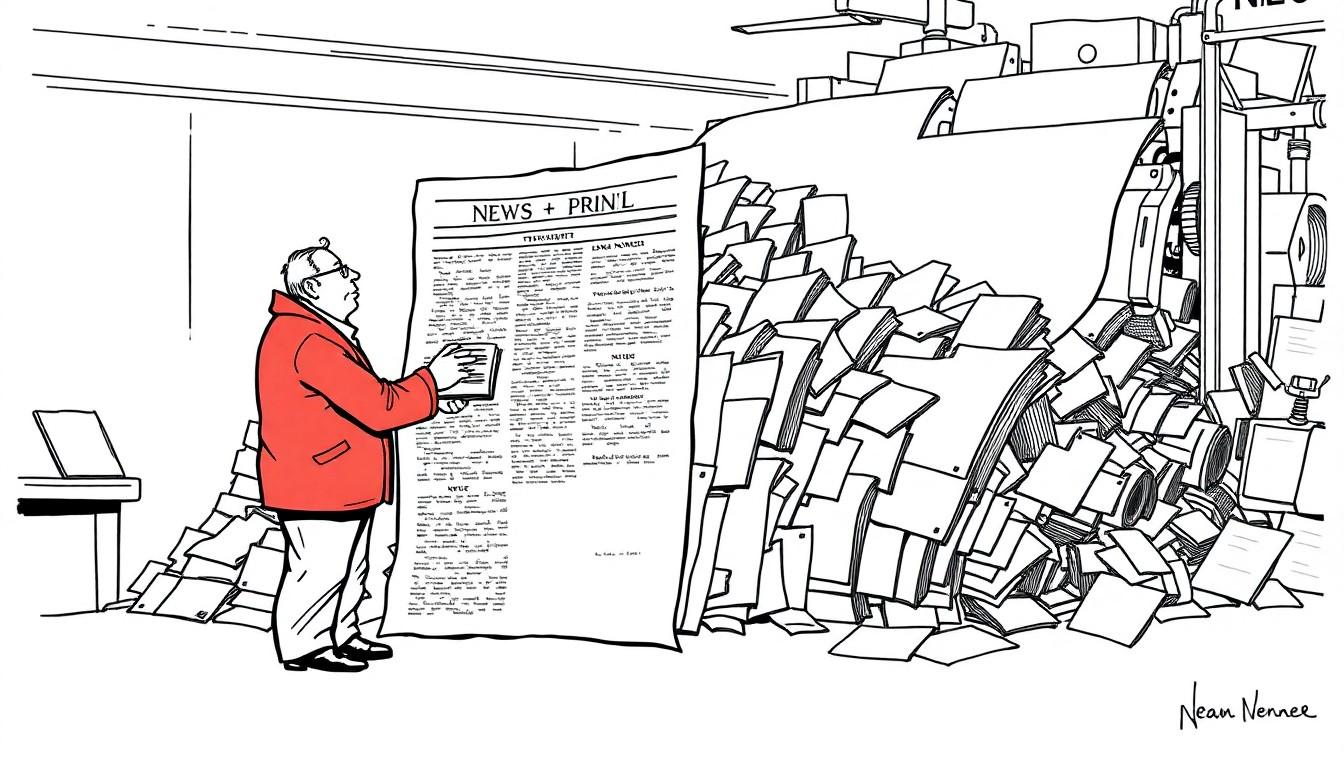
The spread of artificial intelligence is forcing news organisations to reconsider what journalism is for, not simply which software their staff should use. One emerging argument is that reporters’ lasting value may lie less in producing polished prose than in gathering evidence, testing claims and holding powerful institutions to account. That is a provocative forecast, not an established outcome: the Reuters Institute’s 2026 report, based on a survey of 280 media leaders and experts, describes significant uncertainty over how AI and changing audience habits will reshape the industry. (2)
This shift would not make writing irrelevant, but it could loosen the link between a newsroom’s reporting and the finished article a reader sees. AI tools may help reshape verified information for different platforms and audiences, while publishers face the possibility that their material will circulate through systems they do not control. The Reuters Institute’s report highlights the strategic pressure on publishers to adapt as established routes to audiences change; it does not conclude that all newsrooms will follow the same model or that journalists’ roles are destined to disappear. (2)
A stronger case for human reporting emerges when AI itself becomes the subject. UNESCO’s journalism resource urges reporters to examine how systems are built and used, who benefits, who is excluded and what effects they have on rights and the public interest. That approach places investigation and judgement at the centre of coverage: automated tools can help analyse information or challenge a developing hypothesis, but they do not remove the need to assess evidence and explain its significance. (3)
There may also be new ways to earn revenue when journalism informs AI products. Cloudflare says its Pay Per Use beta is designed to let publishers consider offers from AI companies and receive payment when their material is used in a defined way, rather than only when a crawler accesses a page. The company describes a system for reviewing offers and tracking usage, but the programme’s existence does not establish how much publishers will make or whether such payments can compensate for lost audience traffic. (4)
The information underpinning those services matters as much as the stories built from it. The International Development Research Centre says the Masakhane AI Languages Hub aims to develop open-source, culturally grounded datasets across 40 African languages, addressing the limited representation of African languages and contexts in AI resources. Research on the MasakhaNEWS benchmark likewise demonstrates that news-topic datasets can be developed across 16 African languages, while finding that system performance varies between languages and scripts. Together, these efforts point to both the promise of shared data-building and the work still needed to make tools useful across diverse communities. (5)(6)
The need for reliable information is not abstract. South Africa’s Government Gazette records the withdrawal of the draft National Artificial Intelligence Policy, effective from its publication on 4 June 2026. The notice confirms the administrative decision, but does not explain why the draft was withdrawn or verify claims about errors in its references. The distinction is important: a primary document can establish what a government formally did, while further reporting is needed to establish how and why a controversy unfolded. (7)
For newsrooms, that suggests a role extending beyond publishing articles: maintaining trustworthy evidence, preserving credit as reporting is reused and creating information services that meet practical needs. UNESCO’s emphasis on scrutiny and public-interest reporting reinforces the continuing importance of human judgement, while the Masakhane projects show how collaborative data work can address gaps that individual organisations may struggle to fill alone. AI may alter the form in which journalism reaches people; its public value will still depend on the quality and accountability of the reporting beneath it. (3)(5)(6)
Source Reference Map
Inspired by headline at: [1]
Sources by paragraph:
- Paragraph 1: [2]
- Paragraph 2: [2]
- Paragraph 3: [3]
- Paragraph 4: [4]
- Paragraph 5: [5], [6]
- Paragraph 6: [7]
- Paragraph 7: [3], [5], [6]
Source: Noah Wire Services