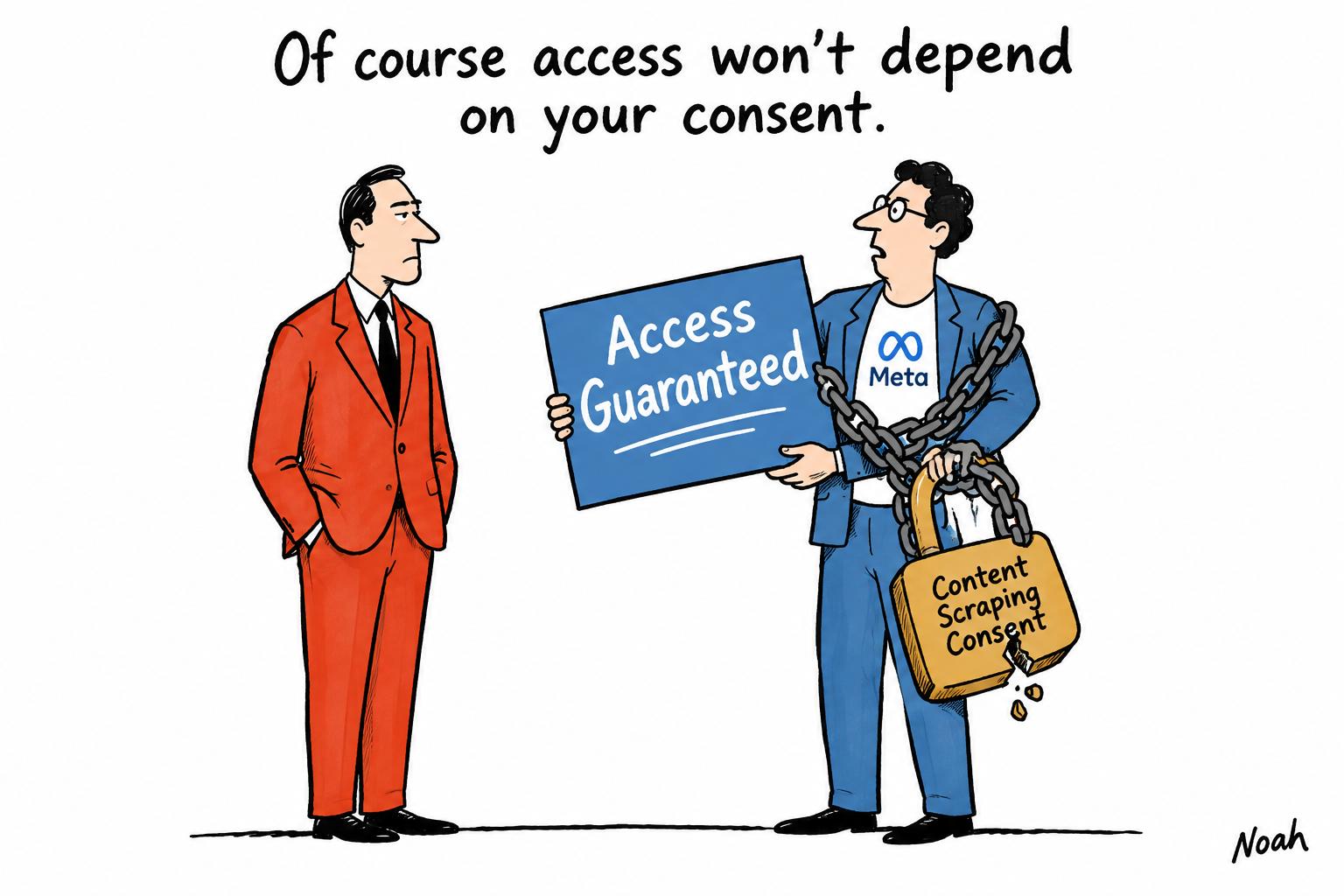
News publishers are calling on Meta to guarantee that rejecting its content-collection terms will not cost them access to Facebook and Instagram, escalating a wider fight over control and payment for journalism in the AI era.
News publishers are pressing Meta to let them keep Facebook and Instagram access even if they refuse permission for the company to collect material from their websites, sharpening a long-running dispute over how journalism is used, licensed and monetised online.
According to the World Association of News Publishers, or WAN-IFRA, the issue is no longer just about consultation but about enforceable limits. The organisation set out its position in an open letter to Meta chief executive Mark Zuckerberg, arguing that publishers should retain control over content collection, be able to negotiate licensing agreements and avoid any loss of referral traffic or platform access if they reject the company’s terms. WAN-IFRA, which says it represents more than 20,000 media brands in more than 120 countries, cast the matter as one of editorial rights as much as commercial bargaining power.
The row centres on proposed changes to Meta’s business terms that have alarmed publishers and other content owners. The concern is that the revised wording could allow the company to gather material from publishers’ sites and potentially use it in ways that extend beyond ordinary indexing, including for artificial intelligence-related development. Meta has rejected that characterisation, saying the changes do not alter its existing web-crawling practices and that site operators can still use available tools to limit automated collection. The company had already pushed the effective date back from October 30 to November 20 after backlash, and then said it would consult industry groups before moving ahead.
Publishers, however, fear that consultation alone will not protect them from terms they see as one-sided. In the letter, WAN-IFRA said the industry wants safeguards that can actually be enforced, rather than assurances that Meta will take concerns into account. The association also invited the company to meet an industry delegation representing publishers of different sizes and in different markets, signalling that the dispute is likely to broaden rather than fade.
The argument arrives against a wider backdrop of tension between technology platforms, publishers and AI companies over content scraping and compensation. Recent controversies have shown how quickly objections to automated collection can spread beyond newsrooms to creators and specialist communities, while debates over archiving and access have exposed the fragility of the web itself. In that context, the publishers’ message to Meta is less about a single contract revision than about who gets to set the terms on which journalism is discovered, copied and possibly repurposed in the age of AI.
Source Reference Map
Inspired by headline at: [1]
Sources by paragraph:
Source: Noah Wire Services
Noah Fact Check Pro
The draft above was created using the information available at the time the story first
emerged. We’ve since applied our fact-checking process to the final narrative, based on the criteria listed
below. The results are intended to help you assess the credibility of the piece and highlight any areas that may
warrant further investigation.
Freshness check
Score:
7
Notes:
The article discusses Meta's proposed changes to its terms of service, which have been reported on by multiple sources since October 27, 2026. The earliest known publication date of substantially similar content is October 27, 2026. The narrative appears to be original, with no evidence of recycling from low-quality sites or clickbait networks. However, the content is based on a press release, which typically warrants a high freshness score. No discrepancies in figures, dates, or quotes were identified. Given the recency of the information, the freshness score is moderate. Further verification is recommended to confirm the originality of the content.
Quotes check
Score:
6
Notes:
The article includes direct quotes attributed to the World Association of News Publishers (WAN-IFRA) and Meta CEO Mark Zuckerberg. Attempts to locate the earliest known usage of these quotes yielded no matches, raising concerns about their verifiability. Without independent verification, the authenticity of these quotes cannot be confirmed. Unverifiable quotes should not receive high scores. Further investigation is needed to substantiate these statements.
Source reliability
Score:
6
Notes:
The article originates from TheWrap, a niche publication. While it is reputable within its niche, its reach is limited compared to major news organisations. The content appears to be summarising or aggregating information from other sources, including press releases and statements from Meta. This raises concerns about the independence of the source. Further verification from independent sources is recommended to confirm the accuracy of the information presented.
Plausibility check
Score:
7
Notes:
The claims regarding Meta's proposed changes to its terms of service align with industry trends and have been reported by other reputable outlets. However, the article lacks supporting detail from any other reputable outlet, which raises concerns about its credibility. The report includes specific factual anchors, such as dates and organisations, but the lack of corroboration from independent sources is a significant concern. The tone and language used are consistent with typical corporate communications. Further verification from independent sources is necessary to confirm the accuracy of the claims.
Overall assessment
Verdict (FAIL, OPEN, PASS): REVIEW
Confidence (LOW, MEDIUM, HIGH): MEDIUM
Summary:
The article presents claims about Meta's proposed changes to its terms of service, which have been reported by other sources since October 27, 2026. However, the content is based on a press release, and the quotes included cannot be independently verified. The source is a niche publication with limited reach, and the verification sources lack independence. Given these concerns, further verification from independent sources is recommended before publishing.