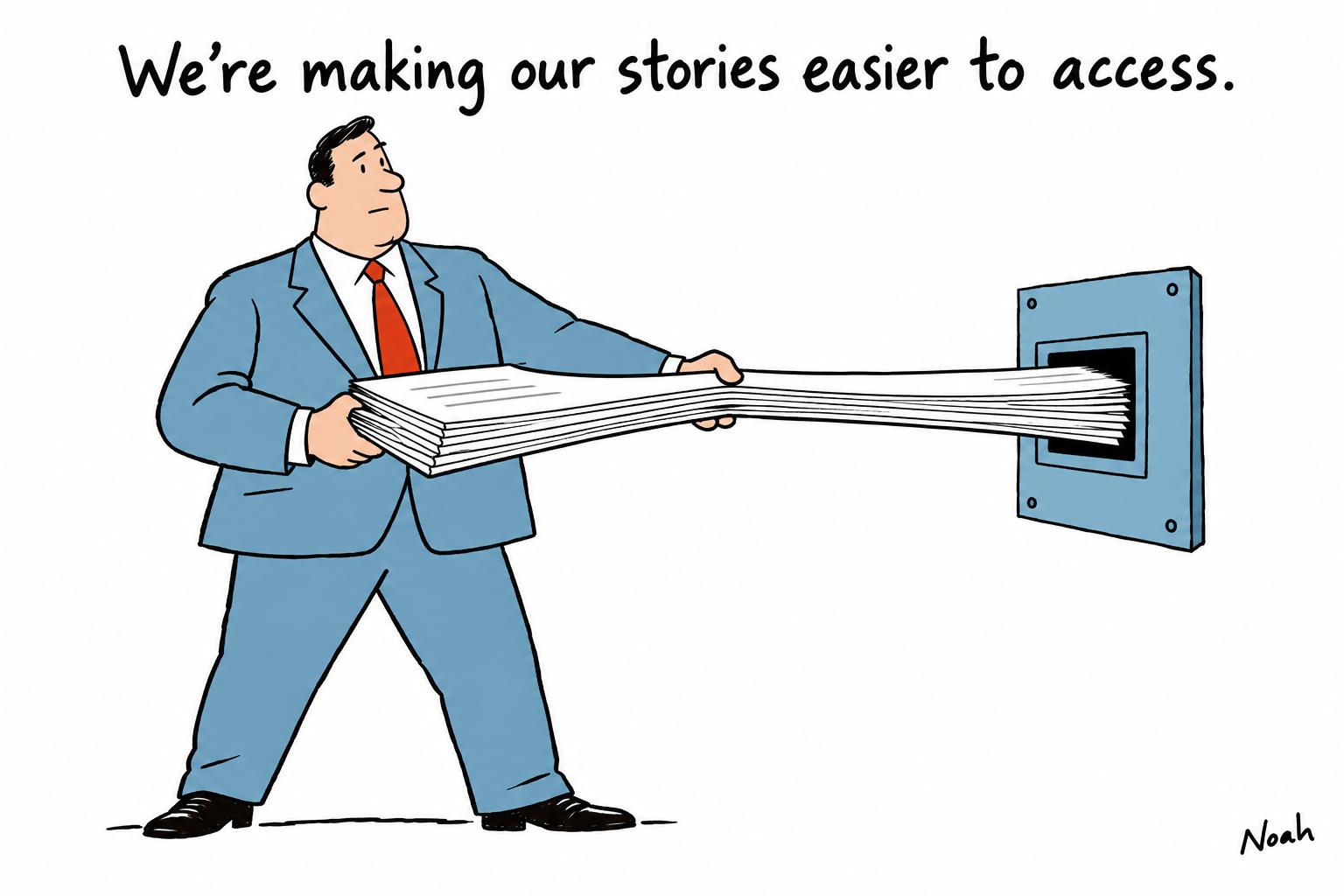
People Inc. is developing a direct way to supply its journalism to artificial-intelligence services, replacing reliance on ordinary webpage access with material arranged for machine use. The planned feeds would deliver stories as Markdown text, accompanied by details such as authorship and publication or update dates.
Digiday reported that the publisher’s chief innovation officer, Jon Roberts, sees conventional web pages as an inefficient source for AI systems because they combine articles with code and other elements intended for human visitors. People Inc. has previously used web crawling and then Amazon S3 to distribute content updates and withdraw material; custom APIs would provide a further, purpose-built route. The reports do not establish that the new system is available to all partners, and no public launch schedule has been given.
The technical format is only part of the strategy. FIPP’s account of Roberts’s remarks places the project within a wider debate over how publishers can make their work available to AI companies on legitimate commercial terms. People Inc. has also said it has a multi-year content partnership with Meta, announced in December 2025, under which material from several of its brands is available to Meta AI users with attribution and links back to its websites. The agreement provides context for the publisher’s interest in AI distribution, but does not explain whether that partnership uses the newer API.
Adding an author’s name and dates could help an AI service identify a story and distinguish updated material from an older version. It cannot ensure that the service will credit the publisher in its answers or accurately represent the reporting. ContentGrip notes that no launch date, pricing, named AI customers or licensing terms have been disclosed, while the available accounts offer no independent performance measurements.
People Inc.’s initiative reflects a broader push to shape how journalism is supplied to AI systems, rather than leaving access entirely to automated collection of public webpages. Whether a cleaner, structured feed improves attribution or gives publishers greater control will depend on how partners use it and what commercial arrangements accompany access. The proposed format is a change in delivery, not evidence that readers will consistently see sources credited in AI-generated responses.
Source Reference Map
Inspired by headline at: [1]
Sources by paragraph:
- Paragraph 1: [2], [3]
- Paragraph 2: [2], [3]
- Paragraph 3: [4], [7]
- Paragraph 4: [3], [4]
- Paragraph 5: [3], [5]
Source: Noah Wire Services