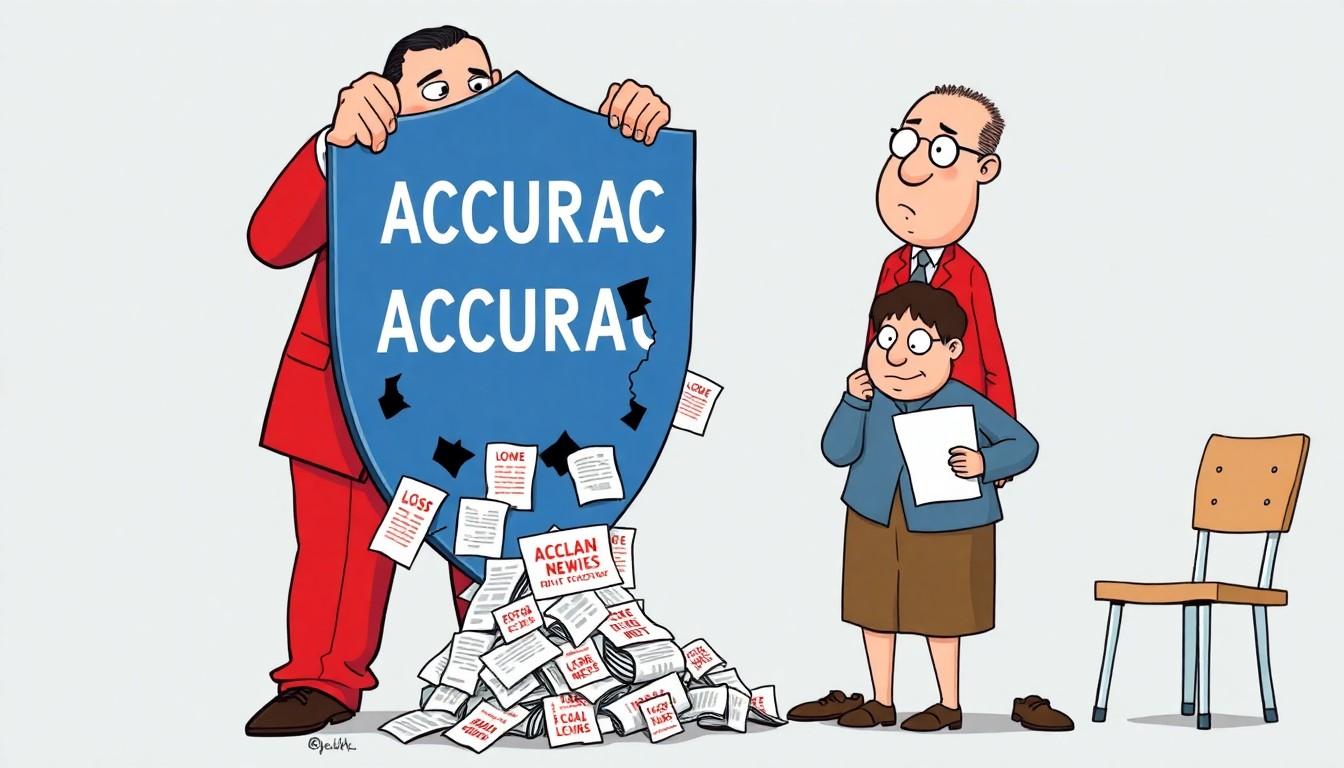
DuMont’s overhaul of local news production around Cologne has prompted concern that cost-cutting and heavier reliance on artificial intelligence are weakening coverage by two of the region’s best-known newspapers, the Kölner Stadt-Anzeiger and the Kölnische Rundschau.
The changes followed the closure of the Rheinische Redaktionsgemeinschaft, which produced local sections for the papers. DuMont said 57 full-time positions were affected and that smaller digital teams would create material for websites, apps, e-papers and print. The publisher has cited declining newspaper circulation and a shift towards digital services as reasons for the restructuring. The paid circulation of the Cologne titles has fallen by about 40 per cent over five years, according to Courrier international.
Readers have encountered unfinished copy, vacant spaces and articles resembling material published elsewhere. More serious problems have included factual errors and a misleading photograph in a report about an educational project in Siegburg. Übermedien reported that the story described a horse-assisted programme but featured chickens; the school’s headteacher said no journalist had contacted her. A correction appeared two days later. DuMont has acknowledged errors during the transition and says it has added checks and technical safeguards.
The company says technology can help identify potential stories in public sources, but maintains that human staff select, research, prepare and approve all material, and that nothing is published automatically. It has also said that a journalist reviews each text and remains responsible for its contents. However, readers are not clearly told which stories have involved AI, and it can be difficult to establish after publication whether a particular mistake resulted from its use. DuMont has opened an investigation into how recent errors occurred.
The restructuring has drawn wider criticism from journalists’ representatives, who warn that dismantling established local teams could leave a lasting gap in reporting. MEEDIA has reported concerns about staffing shortages and declining quality, while ver.di has called for employment guarantees for affected staff. DuMont, by contrast, says the new teams will produce content across platforms and that efficiencies in production should leave more time for reporting and research. The dispute reflects a broader challenge for regional publishers: finding a sustainable digital model without sacrificing the local knowledge and editorial scrutiny on which their journalism depends.
Source Reference Map
Inspired by headline at: [1]
Sources by paragraph:
- Paragraph 1: [2], [3]
- Paragraph 2: [3], [5], [7]
- Paragraph 3: [4]
- Paragraph 4: [2], [4], [7]
- Paragraph 5: [3], [5], [6]
Source: Noah Wire Services