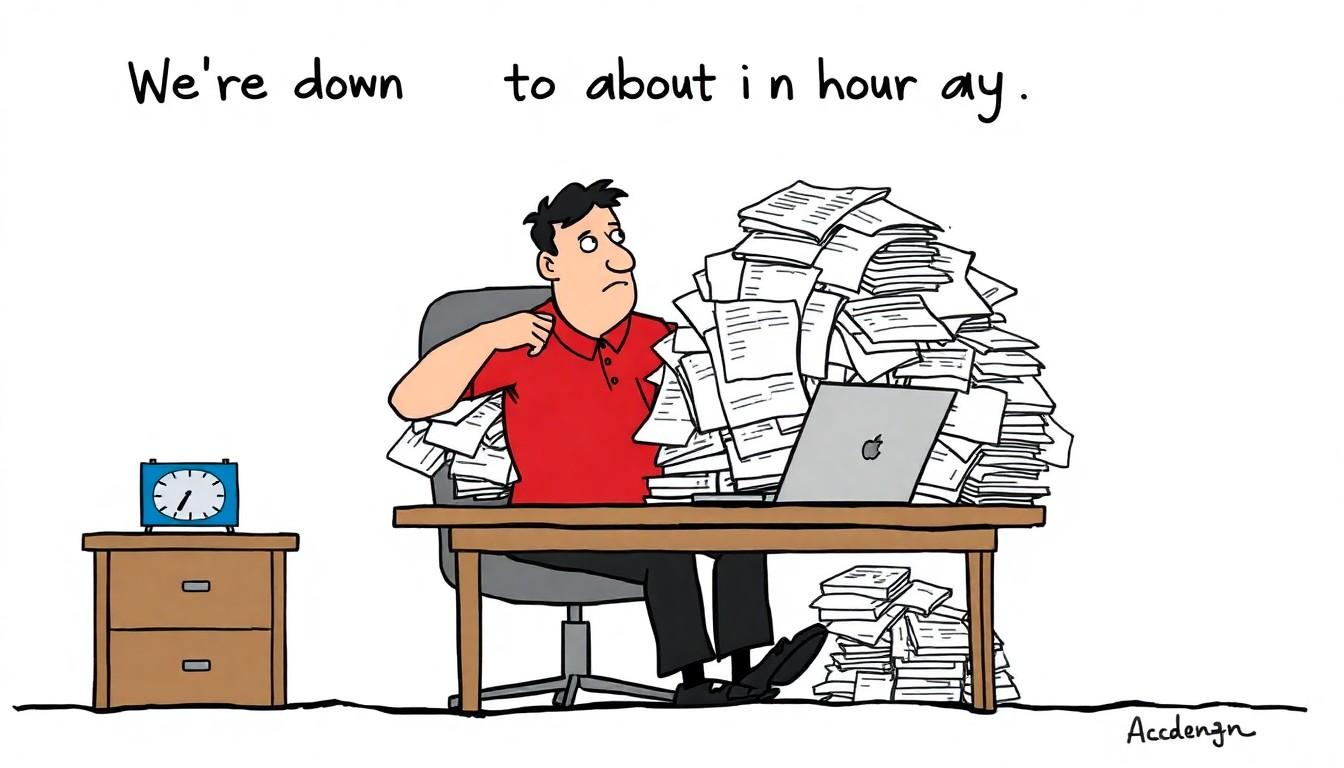
The Washington community newsroom says AI has cut comment-moderation work to about an hour a day, but clear rules and staff oversight remain essential.
My Edmonds News, a Washington-based community newsroom, has been experimenting with artificial intelligence to keep its comment section open while reducing the burden on staff. The project, covered by the Reynolds Journalism Institute, reflects a wider reversal in digital publishing: after years in which many outlets shut comments down because of abuse, some newsrooms are now bringing them back as a way to deepen audience engagement and support revenue.
In the trial, the newsroom compared several moderation products before settling on OpenModeration, which it liked for its customisable rules, relative affordability and responsive support. The experiment was not just about software selection. It also forced editors to examine what they actually wanted the comment area to be, and to define in practical terms the behaviour that should be encouraged, tolerated or rejected.
The outlet began with a mixed system in which the tool could approve straightforward comments while escalating borderline cases to a human reviewer. According to OpenModeration’s own documentation, the service is designed to analyse comments against a community’s rules, route uncertain items for human review and allow moderators to override decisions in a console. My Edmonds News then translated its own community standards into more detailed instructions, refining them to cover personal attacks, first-time contributors and criticism of politicians or policies.
That process also highlighted the limits of automation. The newsroom found that a general set of community guidelines was not specific enough for the system to apply consistently, while local context and cultural nuance remained difficult for the software to judge. WordPress documentation explains that integrations often rely on application passwords, which are distinct credentials created for external services; My Edmonds News had to generate those credentials before the connection worked. The outlet also ran into technical friction when its anti-scraping protections initially blocked access, before staff from both sides worked through the issue.
Despite the early complications, the newsroom says the pilot has cut moderation time to about 45 minutes to an hour a day. It has also prompted more transparent conversations with readers, some of whom offered feedback and adjusted rejected comments so they better matched the rules. My Edmonds News’ existing commenting policy already asks participants to use their real names and follow its code of conduct, and the experiment suggests that clear standards, regular staff oversight and reader participation matter as much as the technology itself. Even so, the newsroom has not treated the tool as a complete solution, but rather as one part of a broader effort to make public discussion more constructive.
Source Reference Map
Inspired by headline at: [1]
Sources by paragraph:
Source: Noah Wire Services
Noah Fact Check Pro
The draft above was created using the information available at the time the story first
emerged. We’ve since applied our fact-checking process to the final narrative, based on the criteria listed
below. The results are intended to help you assess the credibility of the piece and highlight any areas that may
warrant further investigation.
Freshness check
Score:
8
Notes:
🕰️ The closest and apparent source is the Reynolds Journalism Institute (RJI) article, published on 2 November 2026. The supplied text appears to be a recent summary of that report; searches found no substantially similar earlier account of this specific pilot. The underlying project may have been under way for weeks, but no earlier publication of this narrative was found. This supports freshness, though the article is derivative rather than an independently reported new development. ([rjionline.org](https://rjionline.org/news/how-to-make-comment-sections-a-space-for-public-discourse/?utm_source=openai))
Quotes check
Score:
4
Notes:
⚠️ The supplied text contains no clearly marked direct quotations, so there are no quoted passages to trace to an earliest online use. Its claims and details closely follow the RJI report, which attributes observations to newsroom staff but does not independently establish them in the supplied summary. The account’s reported moderation-time reduction and reader responses therefore remain attributable claims, not independently verified measurements. ([rjionline.org](https://rjionline.org/news/how-to-make-comment-sections-a-space-for-public-discourse/?utm_source=openai))
Source reliability
Score:
7
Notes:
✅ RJI is associated with the University of Missouri’s School of Journalism, and its report names the newsroom and people involved and gives concrete details of the trial. This is a traceable specialist journalism source. ⚠️ The supplied article itself is not the original report: its account depends principally on RJI, whose piece describes an experiment it conducted with the newsroom. The vendor, OpenModeration, is also a participant with a commercial interest, so its own documentation supports product-function claims but not independent assessment of the pilot’s success. ([rjionline.org](https://rjionline.org/news/how-to-make-comment-sections-a-space-for-public-discourse/))
Plausibility check
Score:
7
Notes:
✅ The named newsroom has a public commenting policy, and the RJI report supplies specific, internally coherent details, including the setup problems and the reported 45-minutes-to-one-hour daily moderation workload. ⚠️ That time saving and the reader-response claims are attributed to the newsroom and are not corroborated by independent reporting or published measurements located in this search. The supplied text also says the outlet selected OpenModeration for affordability and support; those are reported judgements, not independently tested comparisons. ([rjionline.org](https://rjionline.org/news/how-to-make-comment-sections-a-space-for-public-discourse/?utm_source=openai))
Overall assessment
Verdict (FAIL, OPEN, PASS): REVIEW
Confidence (LOW, MEDIUM, HIGH): MEDIUM
Summary:
⚠️ The account appears fresh: the closest matching report was published by RJI on 2 November 2026, and no substantially similar earlier publication was found. The source is identifiable and the named organisations and policy are verifiable, but the supplied text closely follows RJI’s account and the central outcomes—including reduced moderation time and improved reader behaviour—are not independently corroborated. 🔎 No direct quotations, paywall involvement or distinctive opinion/creative content were identified. Editorial review is recommended to confirm attribution to RJI, check the source map’s apparently unrelated Coral link, and seek independent confirmation of the pilot’s reported results before presenting those outcomes as established facts. ([rjionline.org](https://rjionline.org/news/how-to-make-comment-sections-a-space-for-public-discourse/?utm_source=openai))