Two independent speculative-fiction publishers have made opposition to generative AI part of their publishing terms, setting out limits on both the work they will accept and how their own books may be used.
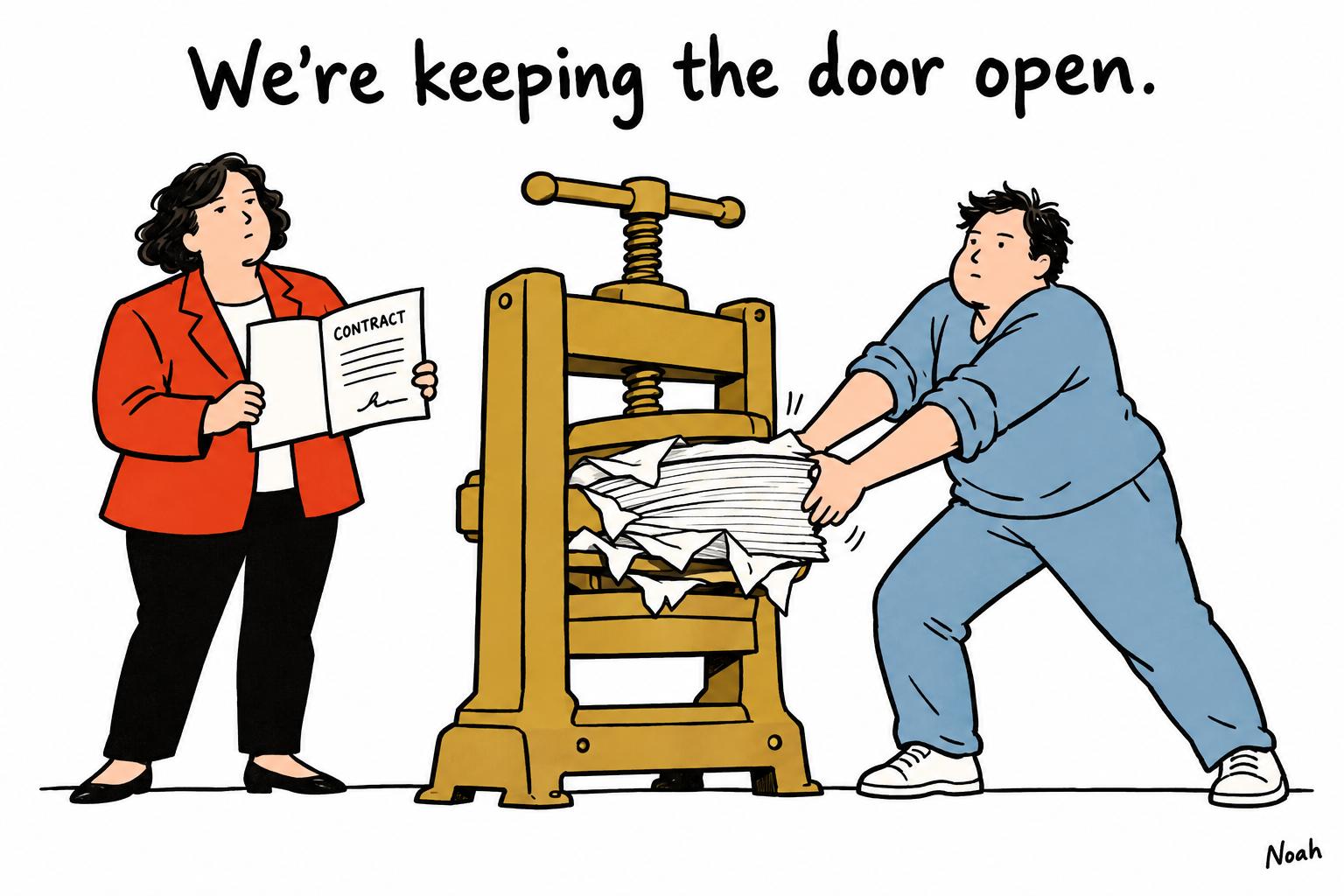
IFWG Publishing International and IPI Comics announced on 17 November that they would reject text and images produced or augmented by generative AI. Managing director Gerry Huntman said the presses had received a growing number of submissions made partly or entirely with such tools, adding to the editorial work required to assess them. The publisher’s policy also rules out knowingly supplying its books to AI models or to intermediaries that provide material for model training. Huntman said the restrictions had been written into company contracts. IFWG distinguishes generative systems from conventional software that supports a creator without taking over the creative work. (According to IFWG Publishing’s announcement and its published policy.)
Candlemark & Gleam had set out a comparable position on 22 October. The publisher says it will not use generative AI, knowingly acquire or publish AI-created manuscripts, or commission AI-generated cover art. Its contracts require writers to confirm that AI did not produce their manuscripts. The press has cited concerns about the use of authors’ work to train models without permission or payment, as well as worries that fabricated details and formulaic prose can undermine the originality and considered world-building expected in science fiction and fantasy. It has also raised concerns about the technology’s energy demands. (Candlemark & Gleam’s statement.)
The publishers’ approach reflects a wider debate across speculative fiction, though not every organisation has adopted the same blanket rule. The Science Fiction and Fantasy Writers Association makes work written wholly or partly with generative language models ineligible for the Nebula Awards and requires disclosure of such use. Its guidance distinguishes those practices from tools such as spellcheck and accessibility software, while acknowledging that identifying AI use reliably can be difficult. (The Science Fiction and Fantasy Writers Association’s advocacy guidance.)
For authors, the new clauses make contract wording an increasingly important part of the discussion. The Authors Guild recommends that publishers set out clear AI policies and incorporate them into agreements, while warning that detection tools can produce false positives and should not be the sole basis for accusing a writer or ending a contract. The Guild has also urged publishers to obtain written consent before uploading manuscripts or authors’ personal information to AI systems, and to guard against submitted material being reused for training. These recommendations focus on consent and safeguards rather than requiring every work to be wholly human-created. (The Authors Guild’s publisher guidance and statement on AI use in publishing.)
The ethical dispute has also reached the courts. The Authors Guild reported that a US federal court approved a $1.5 billion settlement in July 2026 in a case concerning books acquired and copied for AI development. The settlement addresses specified past conduct; it does not resolve claims about AI-generated outputs or future practices. It offers a concrete example of why authors and publishers may seek explicit protections, but does not establish that every AI model was trained on any particular writer’s work. (The Authors Guild’s report on the settlement.)
Source Reference Map
Inspired by headline at: [1]
Sources by paragraph:
Source: Noah Wire Services