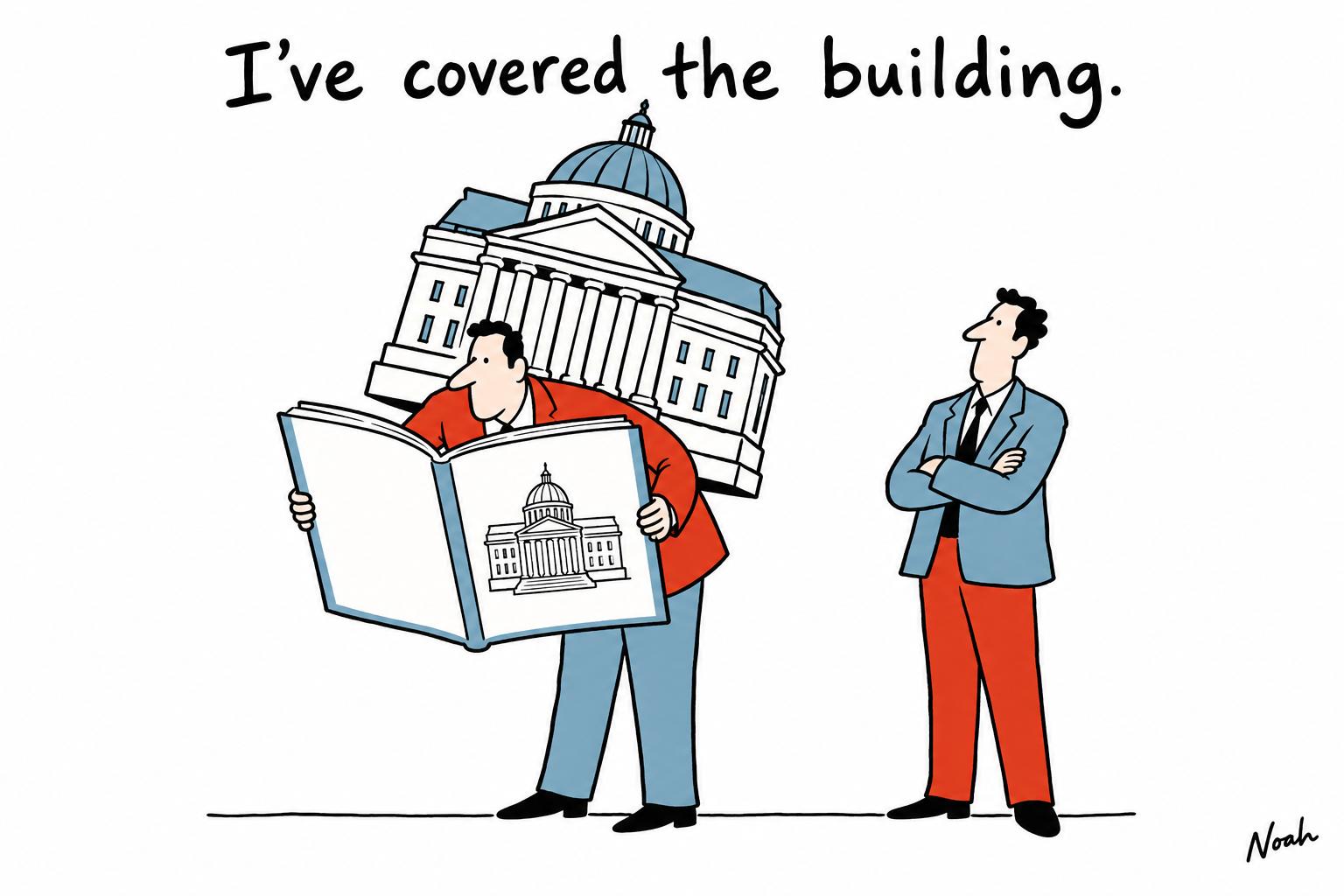
As automated prose spreads, critics warn that fluent summaries can sever architectural judgement from first-hand experience , and leave no witness to answer for the claims.
The warning for architecture is not simply that artificial intelligence can produce poor writing. It is that automated text can make claims about buildings without anyone having seen them, weakening the link between criticism and the places it describes.
A test involving Victor Hugo’s phrase “Ceci tuera cela” illustrates the problem. Asked to explain “This will destroy that”, chatbots offered the familiar interpretation: printed books would displace buildings as records of human thought. But Hugo gave the line a second meaning, too. In Notre-Dame de Paris, he presents the printing press as a force that could undermine the Church’s authority. The excerpt from the novel published by Reading Design makes clear that the phrase concerns both a change in how knowledge is recorded and a challenge to who controls it.
That history offers a more complicated lesson than one medium simply replacing another. Mario Carpo’s Architecture in the Age of Printing, published by MIT Press, traces how communications technologies shaped architectural theory. Printing altered how architects could share images, models and ideas; it did not make architecture itself disappear. Each new medium changes the ways knowledge travels, and what people can do with it.
The same question now applies to digital systems. Architectural knowledge survives in buildings and models, in people and institutions, in physical records such as drawings and photographs, and in digital files. Language models draw on digital material, but produce new text by identifying patterns in their training data. The US National Institute of Standards and Technology warns that generative AI can present false or inconsistent material with confidence. A fluent answer, then, is not necessarily a complete or dependable one.
The risk for criticism is that a chain of automated summaries and generated copy can circulate without anyone returning to the building or checking the account against first-hand experience. Luciano Floridi’s idea of “distant writing”, as summarised in the supplied paper, describes a human author shaping a narrative through prompts and revision while a language model generates the prose. That may leave room for human direction, but it also raises a question about what is lost when the writer’s work moves further from direct observation.
The answer matters because visiting a building is not just a way to gather details. It is part of how a critic develops judgement: noticing what photographs omit, testing claims against the site and deciding what deserves attention. The essay argues that automating routine writing may also remove the apprenticeship through which writers learn those skills. The concern is not that every use of AI produces worthless work, but that a system can produce text without having witnessed what it describes, and without being answerable for its conclusions.
The word “slop” has come to name one version of this anxiety. Merriam-Webster’s announcement of its 2025 Word of the Year defined it as low-quality digital material usually generated in quantity by AI. The term points to volume as well as quality: a flood of plausible content can make it harder to distinguish considered judgement from copy assembled for speed or profit.
Yet the history of print cautions against assuming that a new medium only destroys what came before. As Hugo’s two-part interpretation suggests, the press changed both the circulation of ideas and the institutions that claimed authority over them. Carpo’s account likewise shows how printed images helped reshape architectural thinking. The question is not whether architecture can survive another communications shift, but how its knowledge will be tested and transmitted through it.
For the essay’s author, the answer rests partly with criticism that can be attributed to people and institutions. A magazine can commission writers, take a position and be held responsible for it; a dated print issue also preserves a fixed version of an argument. A chatbot, by contrast, can generate a fresh response each time, without a lasting reputation or a record of judgement to defend. The distinction is not a claim that print is infallible, but that accountable criticism depends on identifiable witnesses.
Architecture will continue to be built on sites, while its ideas and histories circulate through changing media. Generative systems may assist that circulation, but they cannot replace the act of going to see a building and judging it in context. The essay’s central warning is that criticism risks losing its grounding if the path from evidence to opinion is reduced to a loop of digital material and automated prose.
Source Reference Map
Inspired by headline at: [1]
Sources by paragraph:
- Paragraph 1: [2], [6]
- Paragraph 2: [2], [3]
- Paragraph 3: [2], [4]
- Paragraph 4: [2], [6]
- Paragraph 5: [2], [5]
- Paragraph 6: [2], [6]
- Paragraph 7: [2], [7]
- Paragraph 8: [2], [3], [4]
- Paragraph 9: [2], [4]
- Paragraph 10: [2], [4]
Source: Noah Wire Services
Noah Fact Check Pro
The draft above was created using the information available at the time the story first
emerged. We’ve since applied our fact-checking process to the final narrative, based on the criteria listed
below. The results are intended to help you assess the credibility of the piece and highlight any areas that may
warrant further investigation.
Freshness check
Score:
4
Notes:
⚠️ The supplied article page could not be accessed, so its publication date and original text could not be independently confirmed. Searches did not establish the earliest publication of this specific narrative or whether it appeared elsewhere more than seven days earlier. The article draws on material that predates any likely publication: NIST’s generative-AI profile is dated July 2024, and Floridi’s “Distant Writing” paper appeared in 2025. The 2025 “slop” Word of the Year claim is supported by a Merriam-Webster press release dated 15 December 2025, but that does not establish the essay’s own freshness. The source map explicitly says the piece was “inspired by headline” at The Architectural Review and cites that page throughout; without the page text, the extent of reuse or transformation remains unclear. ([nvlpubs.nist.gov](https://nvlpubs.nist.gov/nistpubs/ai/NIST.AI.600-1.pdf))
Quotes check
Score:
5
Notes:
⚠️ The article’s quotation of Victor Hugo’s “This will destroy That. The Book will destroy the Edifice” and its two-part interpretation are corroborated by the Reading Design excerpt, which attributes the text to Notre-Dame de Paris, Book V, Chapter 2. However, the article’s other quoted or attributed formulations—particularly the description of Floridi’s “distant writing” and the alleged chatbot responses—could not all be checked against the inaccessible lead article or a supplied full original source. No search result established the earliest use of the essay’s own wording. The Hugo wording is verifiable; any unattributed or paraphrased wording should not be treated as independently authenticated. ([readingdesign.org](https://readingdesign.org/this-will-destroy-that))
Source reliability
Score:
6
Notes:
✅ The cited institutions and works are substantially verifiable: The Architectural Review is the named lead publication; MIT Press confirms Mario Carpo’s book and its subject; NIST’s official 2024 report is a primary source for generative-AI risk; and the Hugo excerpt is available from Reading Design. ⚠️ The lead article itself could not be fetched, so its author, publication details, sourcing and editorial context remain unconfirmed here. Reading Design is a useful text repository but not an independent authority on the essay’s broader claims. The Merriam-Webster claim is supported through a GlobeNewswire release issued by Merriam-Webster, making it a first-party announcement rather than independent reporting. ([readingdesign.org](https://readingdesign.org/this-will-destroy-that))
Plausibility check
Score:
6
Notes:
✅ The historical and bibliographic anchors checked out: Hugo’s excerpt presents both the printing press’s challenge to Church authority and print’s displacement of architecture as a medium of expression; MIT Press describes Carpo’s book as examining communication technologies and architectural theory; NIST’s report is a relevant source on generative-AI risks. ⚠️ The essay’s main points about first-hand observation, criticism, professional apprenticeship, accountability and the effects of automated writing are arguments and interpretations, not claims established by those sources alone. The source map’s repeated reliance on the inaccessible Architectural Review page means it is not possible to verify whether the evidence fully supports each inference. The “slop” definition matches Merriam-Webster’s announcement, but the cited announcement is promotional primary material, not independent confirmation of the essay’s wider concerns. ([readingdesign.org](https://readingdesign.org/this-will-destroy-that))
Overall assessment
Verdict (FAIL, OPEN, PASS): REVIEW
Confidence (LOW, MEDIUM, HIGH): MEDIUM
Summary:
🔎 REVIEW recommended. Several underlying references are genuine and the Hugo passage, Carpo book details, NIST report and Merriam-Webster announcement are corroborated. However, the lead article could not be accessed, preventing confirmation of its publication date, original wording, author and paywall status; the search did not establish the earliest publication of this specific narrative or rule out earlier substantially similar material. ⚠️ The piece is an essay/commentary rather than straightforward factual news, and several central claims are interpretive rather than independently verified. The sources include a first-party press release and material that supports background claims but does not independently establish the essay’s thesis. The content-type check triggers REVIEW; verify the original page, publication date, attribution and access status, and independently substantiate any claims presented as fact before publication.