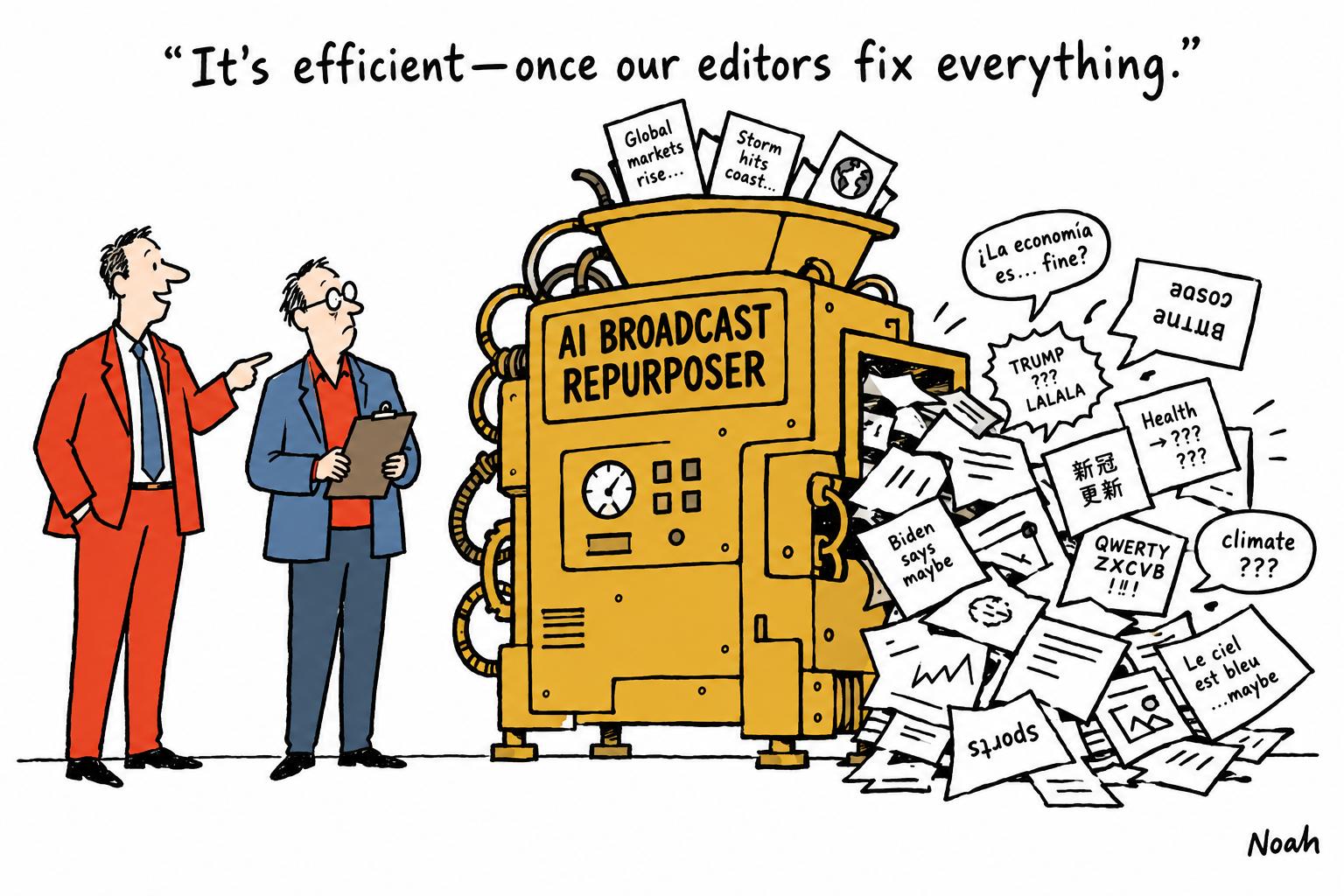
Radio and broadcast newsrooms are being pushed to do more than ever with the same basic resource: time. As audiences drift across websites, podcasts, social platforms, smart speakers and mobile apps, they increasingly expect news in the format, length, language and tone that suits them best. The argument made in RedTech’s special publication is that the real challenge is not simply producing more content, but making one newsroom flexible enough to serve many audiences without multiplying the editorial burden.
Isabel Wiese, product owner at CaptionCast, argues that artificial intelligence should not be used to sideline journalists but to remove repetitive work from their desks. In her view, the editorial advantage begins with live transcription, turning broadcasts into structured, searchable text as they air. That creates an immediate archive of interviews, quotes and breaking developments, while also giving editors a clean base from which to build different versions of the same verified material for distinct audiences.
The broader market suggests that this is not an isolated idea. Bhaasa, for example, has built an AI newsroom platform around converting approved articles into narrated, branded multilingual news videos, complete with presenters, captions and publishing automation. BeatNews takes a different route, scanning public sources such as government sites, press offices and social media to surface newsworthy changes for assignment desks. The common thread is workflow automation: newsrooms are being offered tools that aim to reduce manual effort while keeping editors in charge of what is published and when.
CaptionCast’s pitch also reflects a wider shift away from one-size-fits-all production. The company says its system can adapt a single story for social media, long-form web publishing, younger listeners, children or international audiences, while preserving the core editorial message. It also says it is designed to work with several large language models and text-to-speech providers, giving broadcasters more choice over language quality, voice style and technical setup rather than tying them to one vendor. Cuez, meanwhile, is promoting cloud-based automation that can coordinate scripts, cues, graphics and playout from a single interface, underlining how deeply automation is moving into newsroom infrastructure.
What emerges from these platforms is a redefinition of the newsroom’s role rather than a replacement of it. The most ambitious systems promise not only faster transcription and repurposing, but also SEO-ready articles, subtitles, metadata, social posts and branded audio from one editorial process. Some providers, including CaptionCast, are also stressing GDPR-compliant deployments and the option to keep processing within European infrastructure, a reminder that media organisations remain sensitive to where content is handled. The underlying message is clear: automation may speed production, but the trust, judgement and storytelling still have to come from journalists.
Source Reference Map
Inspired by headline at: [1]
Sources by paragraph:
- Paragraph 1: [2]
- Paragraph 2: [2], [3]
- Paragraph 3: [4], [5]
- Paragraph 4: [2], [5], [6]
- Paragraph 5: [2], [3], [7]
Source: Noah Wire Services