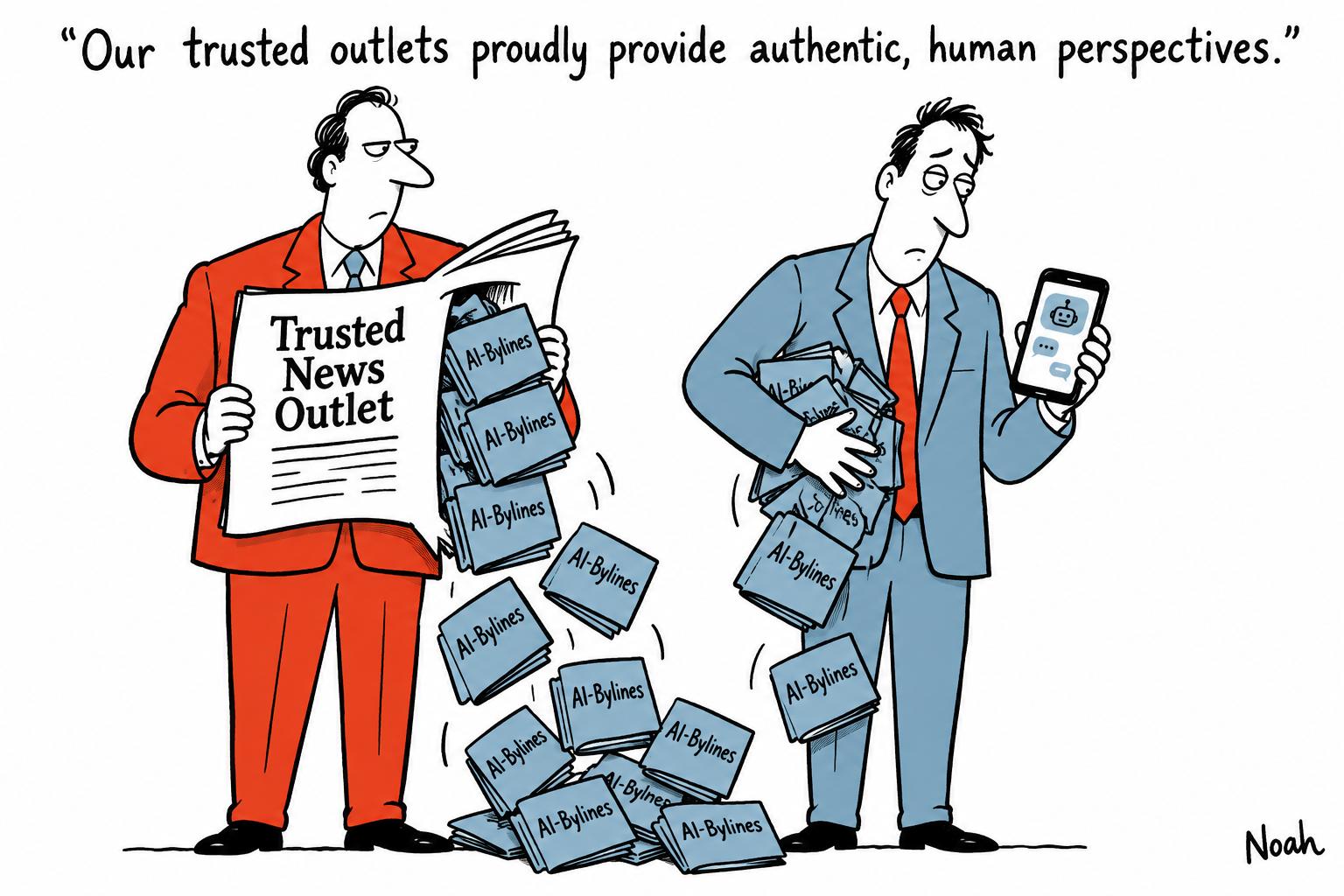
A recent investigation into an Iranian disinformation operation has exposed how artificial intelligence can be used to flood news sites with apparently credible opinion pieces written under invented identities, raising fresh concerns about the vulnerability of smaller publishers and community platforms.
According to OpenAI, the campaign used ChatGPT to produce and refine around 100 fake articles that were published across at least 20 outlets under fabricated bylines. The company said the material was linked to users in Iran and that the content focused heavily on the war with Iran and its possible costs for Americans, with many of the pieces framed as anti-war commentary rather than overt propaganda. The operation also extended beyond drafting the articles: users reportedly asked the chatbot to adapt the text to fit specific publication requirements and to draft pitch messages to editors.
Among the false identities identified by OpenAI was Ervin Hoskins, whose name appeared on an opinion piece in the small Florida weekly Port St. Joe Star warning that the costs of war would continue to affect Americans long after the fighting ended. David Adlerstein, the paper’s publisher, told the Washington Post that the submission came through PeaceVoice, a liberal Oregon-based organisation that has supplied material to the paper for years. He said he did not check the article’s source or confirm the author’s identity because of the group’s longstanding relationship with the publication. The paper serves Gulf County, a community of about 15,000 people, and Adlerstein said he was considering introducing a clearer policy on the use of artificial intelligence.
The episode also reached larger online publications. OpenAI said Hoskins was one of seven names connected to the campaign, while Middle East Monitor and Daily Kos were among the outlets that carried pieces attributed to false authors. Middle East Monitor, which describes itself as supportive of the Palestinian cause, removed articles it said were fake, and Daily Kos said some of the material had appeared through a community platform that was not subject to pre-publication review. Markos Moulitsas, the site’s founder, said the operation undermined trust on the platform and encouraged users to suspect one another of being bots whenever they disagreed.
OpenAI said it had banned the accounts linked to the activity, restricted access to ChatGPT from Iran and shared the information with relevant authorities, although it said it could not determine who was ultimately responsible. The company said the purpose of publishing the findings was to alert regulators, businesses and the public to how hostile actors are exploiting generative AI and the weaknesses in media workflows that allow fabricated material to pass as genuine. The broader lesson, however, is not confined to one country or one platform: as AI tools become more capable and more accessible, the burden on editors to verify names, sources and submission histories has become far heavier, even in smaller newsrooms with limited resources.
Source Reference Map
Inspired by headline at: [1]
Sources by paragraph:
- Paragraph 1: [2], [3], [4]
- Paragraph 2: [1], [2], [5]
- Paragraph 3: [1], [2], [3], [4]
- Paragraph 4: [1], [2], [3], [4], [5], [6], [7]
Source: Noah Wire Services